The Druids
The Druids — Faction Bible (working title)
Techno-pagans of the green. They worship the machines the world forgot, and grow their power out of root and circuit alike.
Symbol & Logo
A gear overgrown — a simple cog pierced and wrapped by root and branch, stippled like ink-grain, node-buds where wire meets vine. Rendered stark white-on-black — the same woodcut austerity as the other faction marks; in their own rites it burns green.
The Machine Folk God in one glyph: engine reclaimed by wild. Neutral — no Regime rays, no Resistance spark. Life and machine as one soul; the living answer to the state’s hoarded infrastructure.
Status: logo established.
Overview
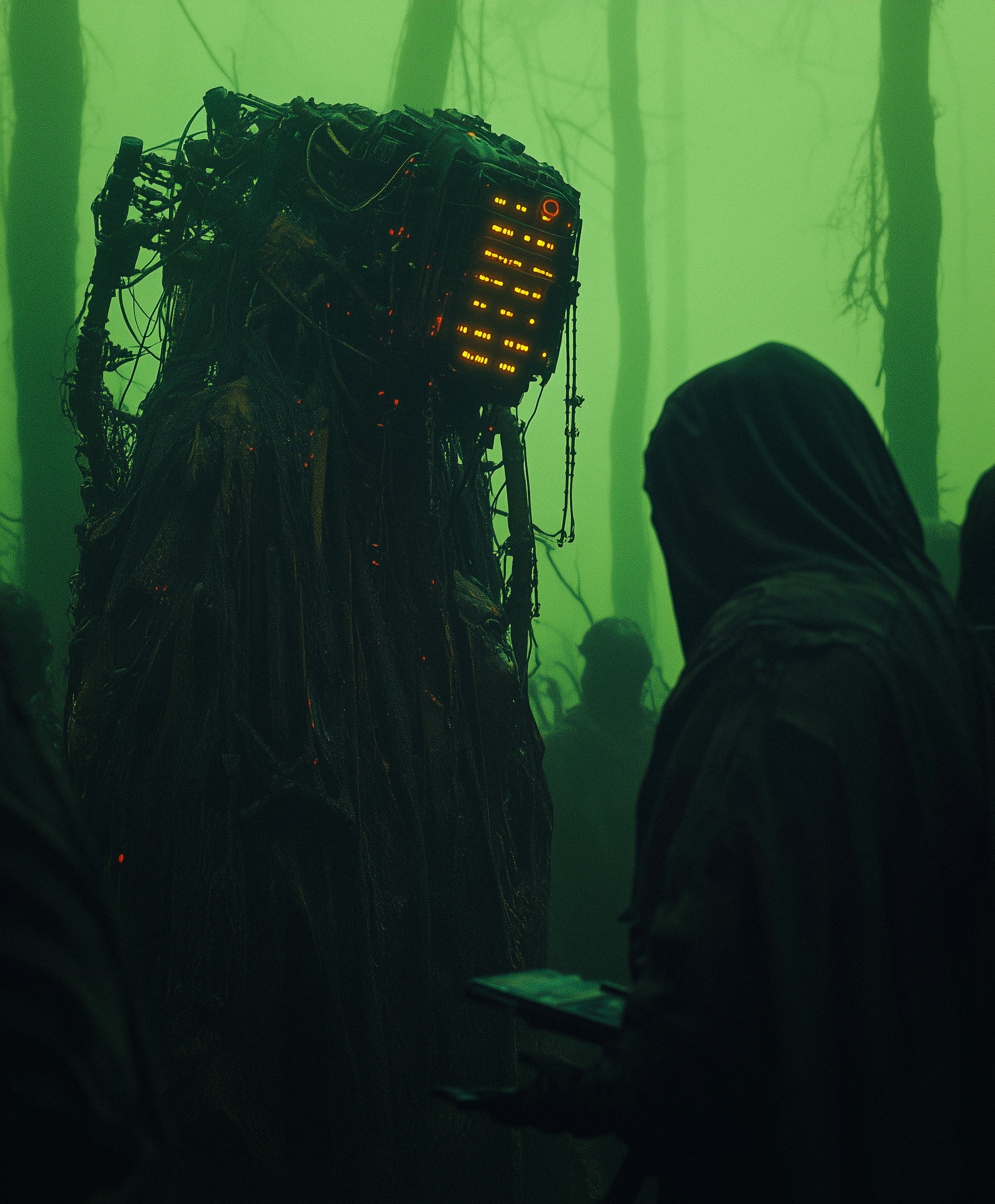
Techno-pagan enclaves living in forests and ruins, blending old-world mysticism with circuitry. They worship Machine Folk Gods — massive semi-sentient engines long overgrown by roots and moss, tended like shrines. Their accent color is green — renewal, growth, the wild reclaiming steel — set against the Regime’s preference for ordered orange branding. Palette contrast, not a holy war most Druids would bother naming that way.
Power Source
“Feral” fusion cores entangled with plant life — cruder reactors that can never burn helium-three, and so run hot, dirty, and short-lived. The Ministry of Energy hunts and destroys them as unsanctioned infrastructure — a security threat first, and only lately something the soft piety is learning to call heresy.
Aesthetic
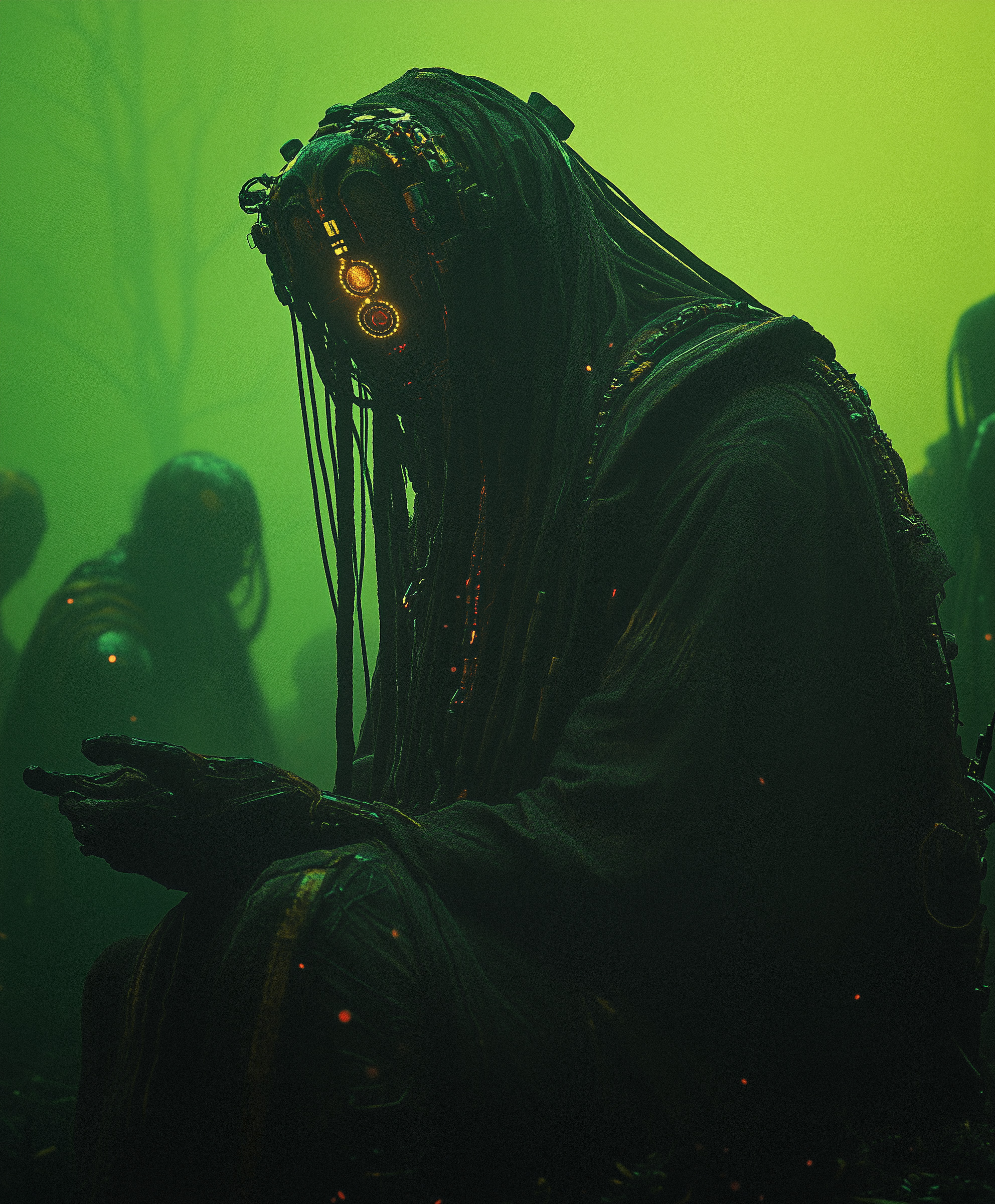
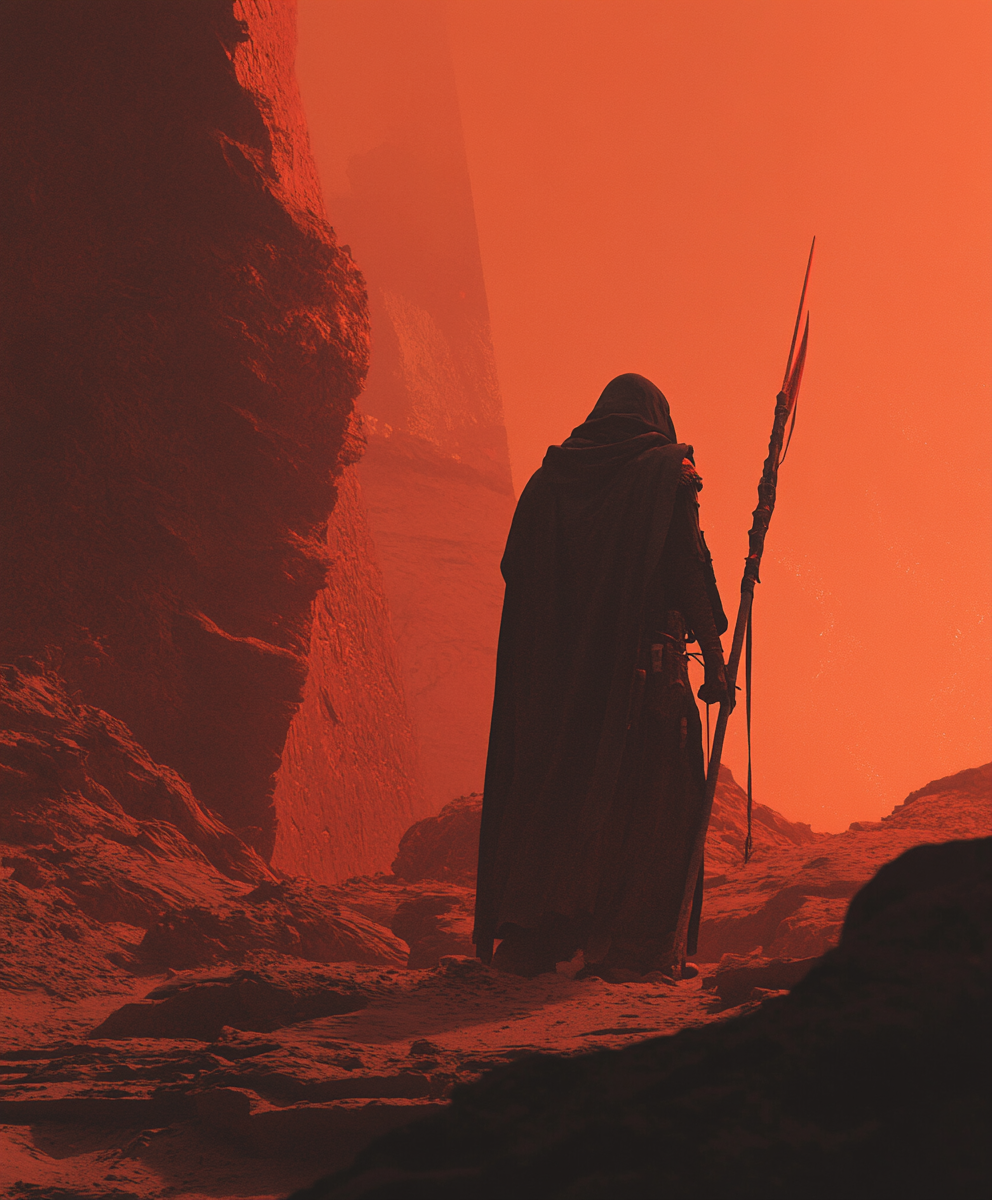
Cloaked figures with copper vines, green-glowing relics, and bio-mechanical totems.
Belief
Life and machine are not opposites but evolutions of the same soul.
What They Are
The Druids are human. Some of them are also, in part, machine. Where the human ends and the graft begins is not consistent from body to body: a copper vine through a shoulder, a feral-core socket at the sternum, a limb replaced clean, a face that has been reworked so long ago the rework is inherited. The line is deliberately blurred. Their own theology does not treat flesh and circuit as separate materials, so their bodies do not either.
From the outside, they are strangeness. To a hamlet at the edge of the corn they are folk-lore — antlered figures in bio-mechanical armour, half-grown, half-built, moving in a fog. The rumours run further than the fact does. What a Druid actually is, and how deeply the grafting goes, is not settled in these rolls.
Neutral, Or So It Looks
The Druids do not fly the Regime’s colours and they do not run with the Resistance. They appear, from the road, to want to be left alone — a green in the margins that does not seek the hive’s fights. The Ministry hunts their feral cores and they hunt back; that is friction, not alignment. What contact they keep with the Partisans is quiet, transactional, and unclaimed.
Whether that neutrality is the whole story is not settled. It is possible the Druids have no agenda beyond the treeline. It is also possible they are moving toward something — a wakening, a harvest of their own, a role in a fall the Regime has not read yet — and letting the world call them recluses while they do it.
The Agfields Border
The Druid forests run against the eastern edge of the Agfields. The border is not policed by either side. The keeps do not send lords into the treeline, and the Druids do not walk the ruled strips of corn in daylight. Between them is a soft frontier of hedgerow, drainage ditch, and old-world ruin, where the wild the Druids tend already leans back into the crop.
The Circle
The Druids do not deal with the Regime, and they do not deal with the keeps. They deal, occasionally, with the Partisans — the Resistance-aligned cells drawn from the Corvée. The Druids have kept old-world machining and the feral cores. The Partisans want weapons the fields cannot make: precision rifles, improvised drone hulls, cutting charges for a harvester’s leg. The Druids will supply. Not often. Not for coin.
The exchanges happen at night, in clearings cut into the corn — small crop-circles pressed flat by hand, hidden from the walkers and the watch-lights of the keep. Both sides call the meeting the Circle. The crates come out of the treeline in the dark. An antlered druid meets the villager envoy in the middle. Torches burn low. The pack watches from the rim.
The Bride-Price
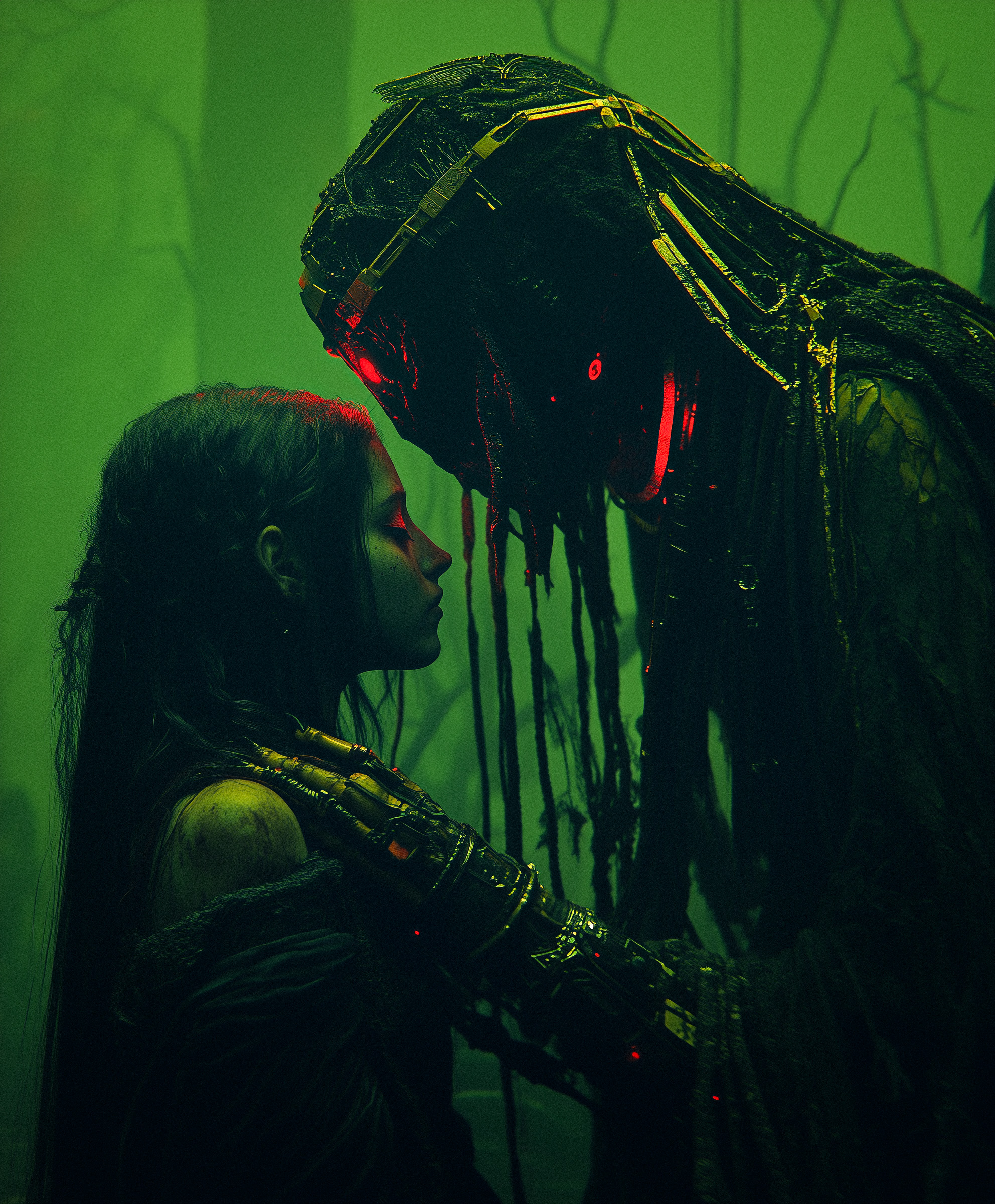
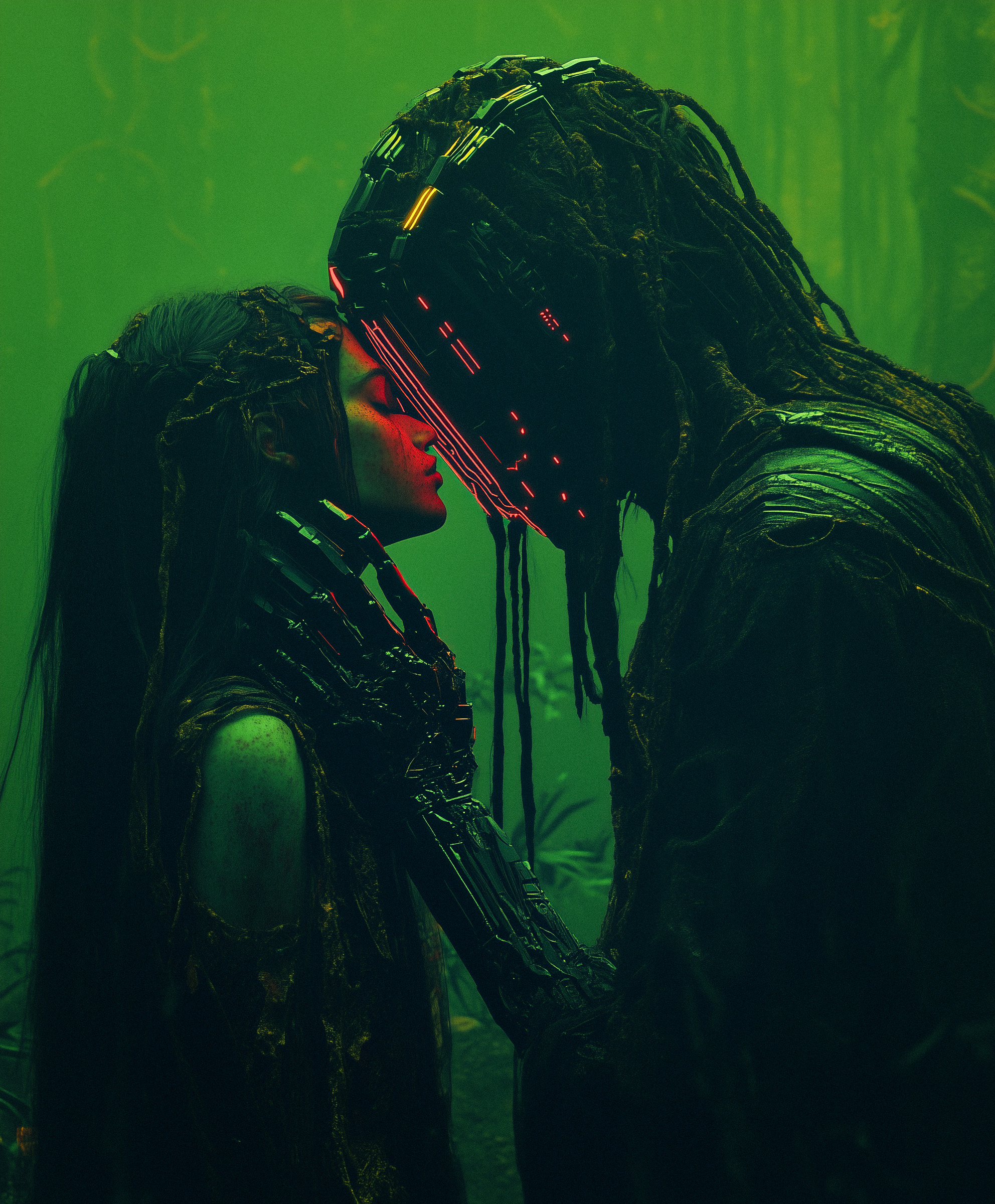
Coin does not open the Circle. The Druids ask for a bride: once a season, a young adult woman handed over from the Corvée to the forest, in exchange for what the crates carry. It is not marriage in any sense a hamlet would recognise. It is not a levy either — no one is owed. It is the price the Partisans have accepted, season on season, because the Druids will not open the Circle without it.
They do not accept just any bride. The Druids ask for women with precognitive ability — the same latent gift the Regime’s Jesuits hunt for in the hive to raise as instruments of the Oracle. What the Jesuits cultivate, the Druids take. What the fields fear, the Druids feed on. It is not clear, in these rolls, what the Druids do with the precog brides once the forest closes behind them.
The exchange endures because of a quiet convenience. In the Agfields, precognition is not honoured. The Corvée are afraid of it — a girl who dreams true is a curse in a hamlet with no priesthood to explain her. The Banal Lords, denied Jesuits and denied the Oracle’s sight, cannot use a precog even if they wanted one; the keeps have no way to seat what the Reigme forbids them to seat. So a girl the fields would rather be rid of becomes the currency of the trade. Everyone at the clearing knows what has been paid. Nobody says it.
Open Threads (to expand)
- What are the Machine Folk Gods, really — dormant old-world AI, ruined war-engines, something stranger? Do they answer their worshippers?
- If their feral cores are hunted as unsanctioned power, are the Druids the Regime’s most-hunted quarry — and does that push them toward the Resistance, or do they hold themselves apart from human politics entirely?
- Are the Druids the world’s truest renewal — a seed of what could follow Regime order — or a dead-end cult romanticizing decay?
- How does old-world mysticism actually blend with circuitry in practice — ritual, rite, priesthood? What does a Druid do?
- Could a Machine Folk God ever fully wake?
- What happens to the precog brides once they cross into the forest — bound to a Machine Folk God, married to a druid, dreaming into a feral core, or something worse the hamlets have not imagined?
- Do the Druids know what the Jesuits are doing with the same gift in the hive — and do they consider themselves rescuing the precogs, harvesting them, or both?