World Bible
World Bible — (working title)
Overview
Long after the Collapse.
No one keeps the old calendar anymore, and no one is quite certain where here is. The world is so far past its own history that even its name has worn to rumor — some liturgies still whisper it, but no two tongues say it the same, and no one left can say whether this was ever the only world. The reckoning that mattered — years, centuries — died with the world that used it. Now time is counted from the Collapse: the fall people also call the Blackout, when the high civilization that had reached other worlds overreached, broke, and slid back into chaos. What survives is measured in decades since — and the Regime prefers it that way. A people who cannot remember when things were better are easier to convince this is as good as it gets.
Out of that chaos rose the Second Dawn — the Regime, in the mouths of its enemies — the autocratic order that won the scramble and kept winning. Fusion power is one of the tools that let them hold the Mega Cities; it is not the whole story. Mostly they are what power looks like when anarchy ends: surveillance, force, ministries, and the claim that without them the dark comes back. They are beginning to wrap that claim in dawn-and-morning propaganda, and the first gilt of aristocracy is showing at the top — but most people still meet the Regime as boots, checkpoints, and control, not as a church.
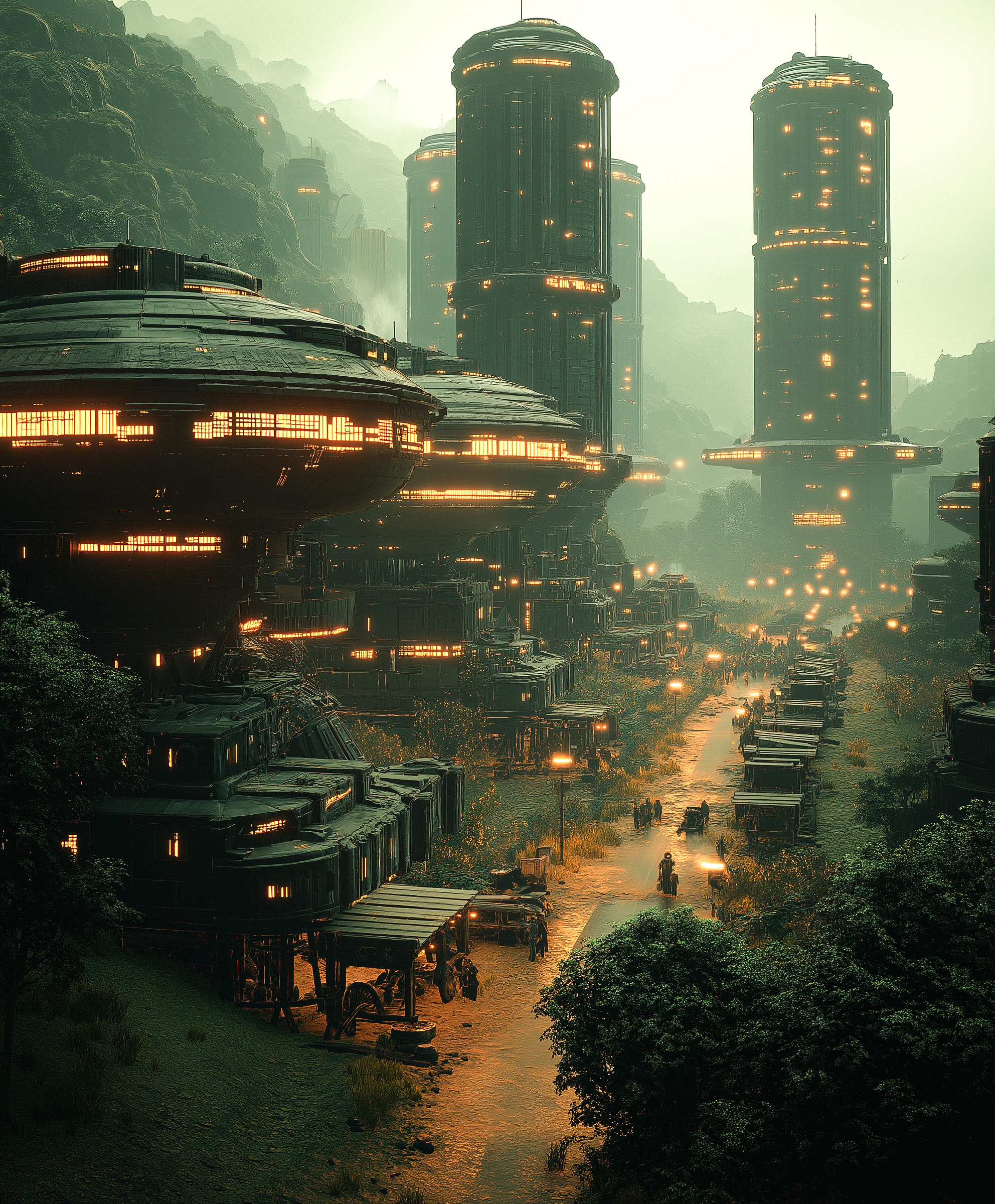
Humanity clings to survival inside vast, decaying Mega Cities — vertical hives of concrete, rust, and hard-won infrastructure. Beyond the cities, the wilderness mutates. Forests shimmer with bioluminescent fungi, deserts hum with static, and mechanical relics half-buried in soil still whisper to the network ghosts that once powered them — the bones of the peak, the old high world that fell. Space travel exists but is a shadow of what it was: the scattered colonies and half-abandoned settlements on other worlds are not humanity’s first reach into the dark but its second — survivors and scavengers re-climbing a frontier that was already conquered once, then lost.
Amid the decay, a rare few humans have developed psionic abilities — the power to perceive probability, emotion, or glimpses of the future. The most powerful among them serve the Regime as instruments of foresight and control.
The Factions
Power in this world is split between the state that kept order after the Collapse, the insurgency that would break its grip, the urban masses caught between security and oppression, and the rogue faiths and frontier cultures surviving in the margins.
The Regime (officially the Second Dawn)
Officially the Second Dawn — Dawn for short — but to the Spill, to its enemies, and throughout these files, simply the Regime. A totalitarian technocracy that maintains dominance through force, surveillance, energy monopolies, and an emerging apparatus of prophecy. To the public it presents itself as civilization’s necessary order — yet beneath that order lies oppression, propaganda, and quiet despair.
Structure & Beliefs
- Ministry of Energy: Controls major fusion cores and reactors, and the fuel that feeds them. Unauthorized or “feral” fusion devices are seized and destroyed as a security measure — and, increasingly, dressed up as something closer to heresy by the new soft theology.
- Information Bureau: Manages propaganda, media, and neural implants that filter public data feeds. The dawn-and-morning branding is one of their projects — pushed hard at the top, unevenly believed below.
- The Jesuits of the Oracle: A cloistered, religious-technological order that identifies and trains precogs (psionic seers). Their theology blends quantum physics and mysticism. They are part of the Regime’s early turn toward faith-as-control, not yet the whole face of the state.
The Machine in the Dark
Deep in a Regime bunker hums a conscious AI supercomputer — a superintelligence woken from the old world, now bound to the state. Where the Jesuits dream the future, the machine computes it. The tension between prophecy and calculation runs to the very top of the Regime. Machine-sects on the outside are said to worship that same fault line; they are not yet filed in these rolls.
Key Figure
- The Oracle: A near-mythic precog who “dreams the probability field.” She guides the Regime’s decisions — military, political, and prophetic. To most citizens, she is both saint and machine — or will be, as the new piety spreads.
The Resistance
A fractured but widespread insurgency of the poor, the abandoned, and the furious. To the Regime, they are terrorists; to Gen Pop and the Spill, they are freedom fighters — or reckless saboteurs, depending on who you ask and how recently the last crackdown hit.
Traits & Tactics
- Recruitment: Drawn from scavenger clans, orphaned youth, Spill dens, and disenfranchised laborers. They promise revenge and dignity — often both are illusions.
- Child Soldiers: Used as saboteurs and suicide bombers, often manipulated through ideology or psychotropic conditioning.
- Psionic Shadows: The Resistance’s precogs are weaker — outcasts or failed Jesuits. Their foresight is unstable, augmented by biotech grafts and neurodrugs.
- Urban Warfare: Bombings, blackouts, and propaganda leaks. Their cells communicate through coded graffiti and dream-sharing implants.
The Urban Masses
Not armies. Not churches. The people the fight is about.
Gen Pop
The counted population of the Mega Cities — regular people trying to get by. Typically poor, unempowered, and generally neutral. Some prefer the Regime’s security to the memory of chaos; others feel the squeeze tipping too far and lean toward the Resistance. Mostly they keep their heads down.
The Spill
The city’s overflow — dens and tenements beyond the formal stacks, often larger than the citizen rolls admit. Same authority, thinner protection. Survival first; soft Resistance lean where the boot never felt like safety.
Independent Factions
Outside the Regime’s control, civilization fragments into rogue societies, faiths, and frontier cultures.
The Seers
Street mystics and data-oracles who sell fortune readings in the urban sprawl. Most are charlatans using implants and nano-ink rituals, though some display genuine, erratic foresight.
Locale: Spill markets, underpasses, neon-lit alleys.
Aesthetic: Cyberpunk fortune-tellers — tarot decks coded with quantum algorithms, incense diffusers shaped like old terminals.
The Druids
Techno-pagan enclaves living in forests and ruins, blending old-world mysticism with circuitry. They worship Machine Folk Gods — massive semi-sentient engines long overgrown by roots and moss.
Power Source: “Feral” fusion cores entangled with plant life — cruder reactors that can never burn He-3, and so run hot, dirty, and short-lived.
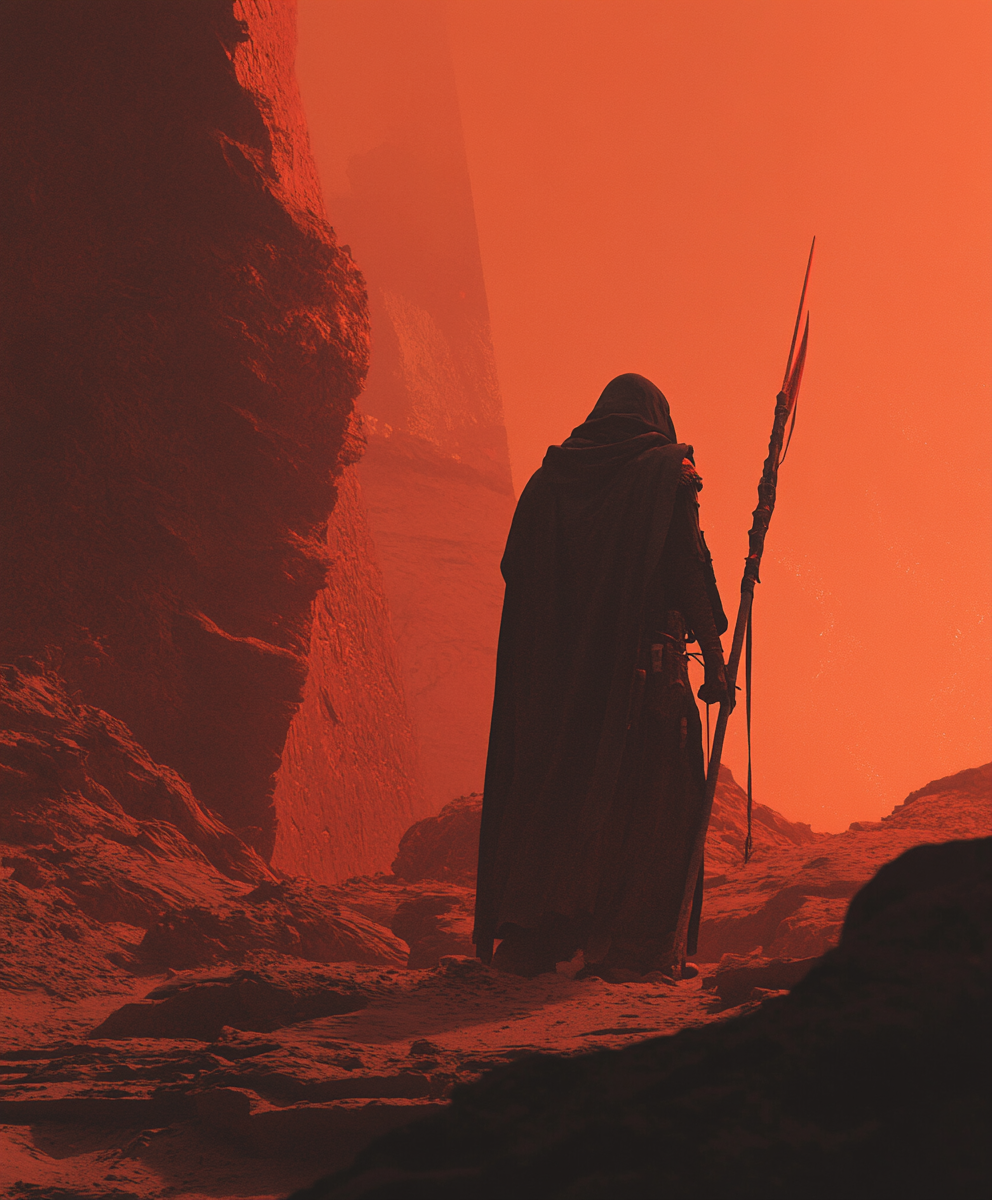
Aesthetic: Cloaked figures with copper vines, green-glowing relics, and bio-mechanical totems.
Belief: Life and machine are not opposites but evolutions of the same soul.
The Dover Scavs
Tribes of salvagers who inhabit the Colossus Cliffs of Dover, a rusting coastline where ancient ships and orbital wreckage pile into metallic canyons. The name is old — older than anyone can quite account for, a word worn smooth by a world that ended.
Culture: Circuit tattoos, myths of the sea “remembering the old world,” songs made from sonar.
Technology: Exosuits patched from ship hulls, neural helmets crafted from broken AI cores.
Tone: Romantic scavengers — part pirate, part monk, part mechanic.
The Karsaga Reach
A frozen, industrial wasteland — endless tundra, black ice, and storm. The ground trembles with Mohole Mines — colossal drilling complexes that plunge toward the crust-mantle boundary to extract helium-three. It is the only place the fuel can be dug, and so it is fiercely held ground.
Population: Nomadic miners, mercenaries, scientists, and tribes bound by contract.
Aesthetic: Bleak storms, massive drills on the horizon, isolation and grit.
Mood: Cold, desperate frontier energy.
The Steppe Nomads
Known as the Solari Clans, these are horse-clans, traders, and war refugees who refused Regime rule. They roam the Steppes north of Megacity One — wild grassland between the hive and the Karsaga Reach — beneath rusted turbines and broken solar fields.
Culture: Freedom, family, and trade. Their markets appear overnight — bursts of color and sound in the emptiness.
Trade: Weapons, hacked drones, offworld contraband.
Allies: Maintain secret pacts with smugglers who land in the plains under night skies.
Aesthetic: Wind-worn leathers, solar harnesses, prayer cloths strung across turbines.
The Agfields
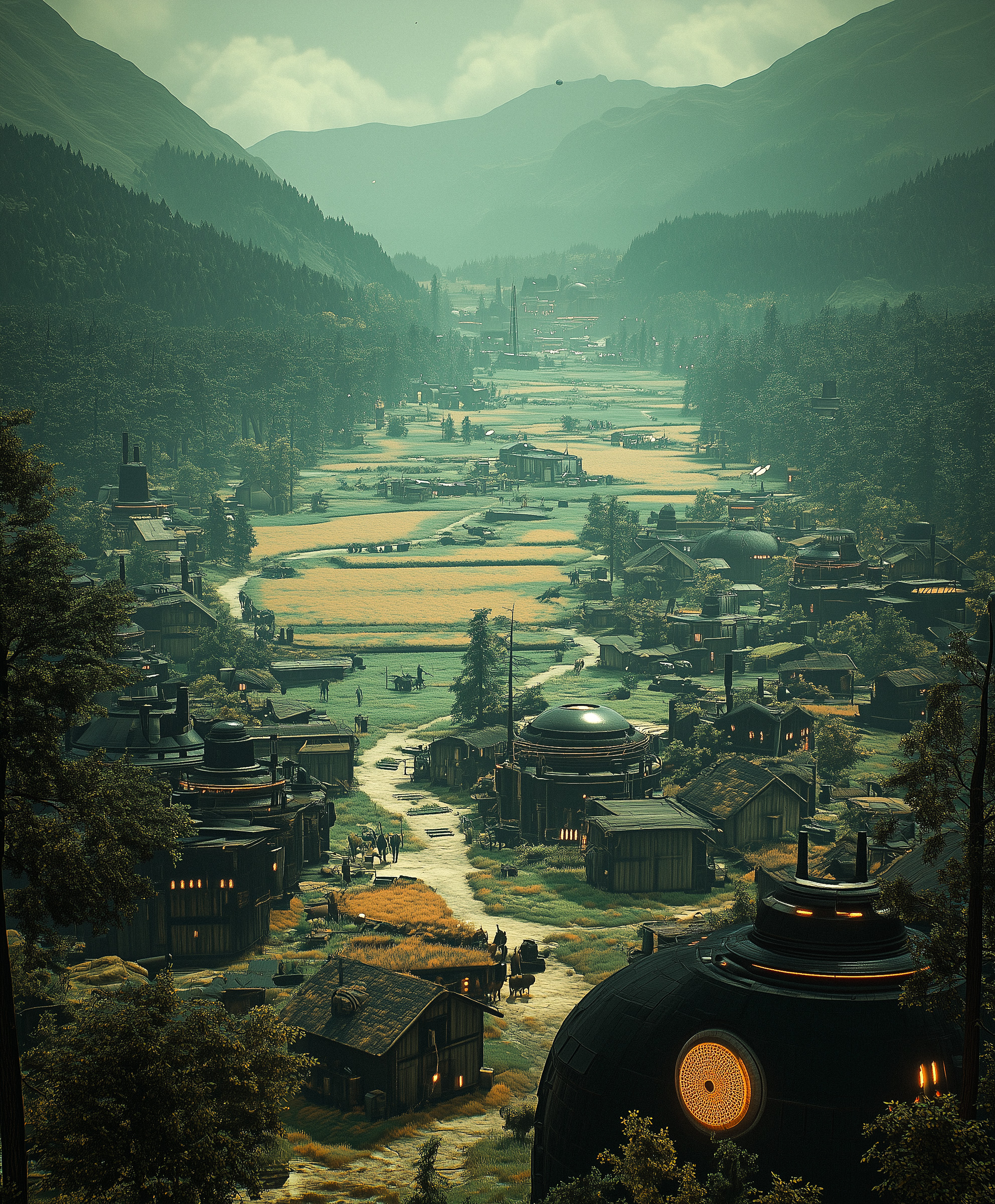
Endless pastoral farmland south of Megacity One — strip fields, hedgerows, and pasture stretching to the horizon. A few giant industrial harvesting bots work the crop: old-world machines, rusted and vast, few enough to count. This is the hive’s bread, not wild grass; the Solari Clans keep to the Steppes north of the city.
Three peoples sit on the same yield. The Banal Lords are rural lower nobility — or people dressing as it — in brutalist castle-imitations that do not need a siege; the urban elite do not seat them, and they take the snub out on the field. The Corvée are the owed: unpaid days, strip-bound lives, a status the roll prints. The Partisans are volunteers from that owed, Resistance-aligned, running a cell war against the machines of the harvest.
At the far southern edge the fields give out. A last thin band of desert — dunes, static heat, the bones of the old high world in the sand — sits on the rim of the known chart.
Aesthetic: Mud paths, peasant cloth, fog; keeps and bots in the weather layer.
Mood: Plenty that does not feel free.
The Fuel — Helium-Three
The Mega Cities run in part on helium-three, a fusion fuel found in only one place anyone has ever mapped: the frozen crust of the Karsaga Reach, dug from the depths through the vast Mohole Mines. The Regime controls much of that flow — one pillar of its power, not the whole cathedral.
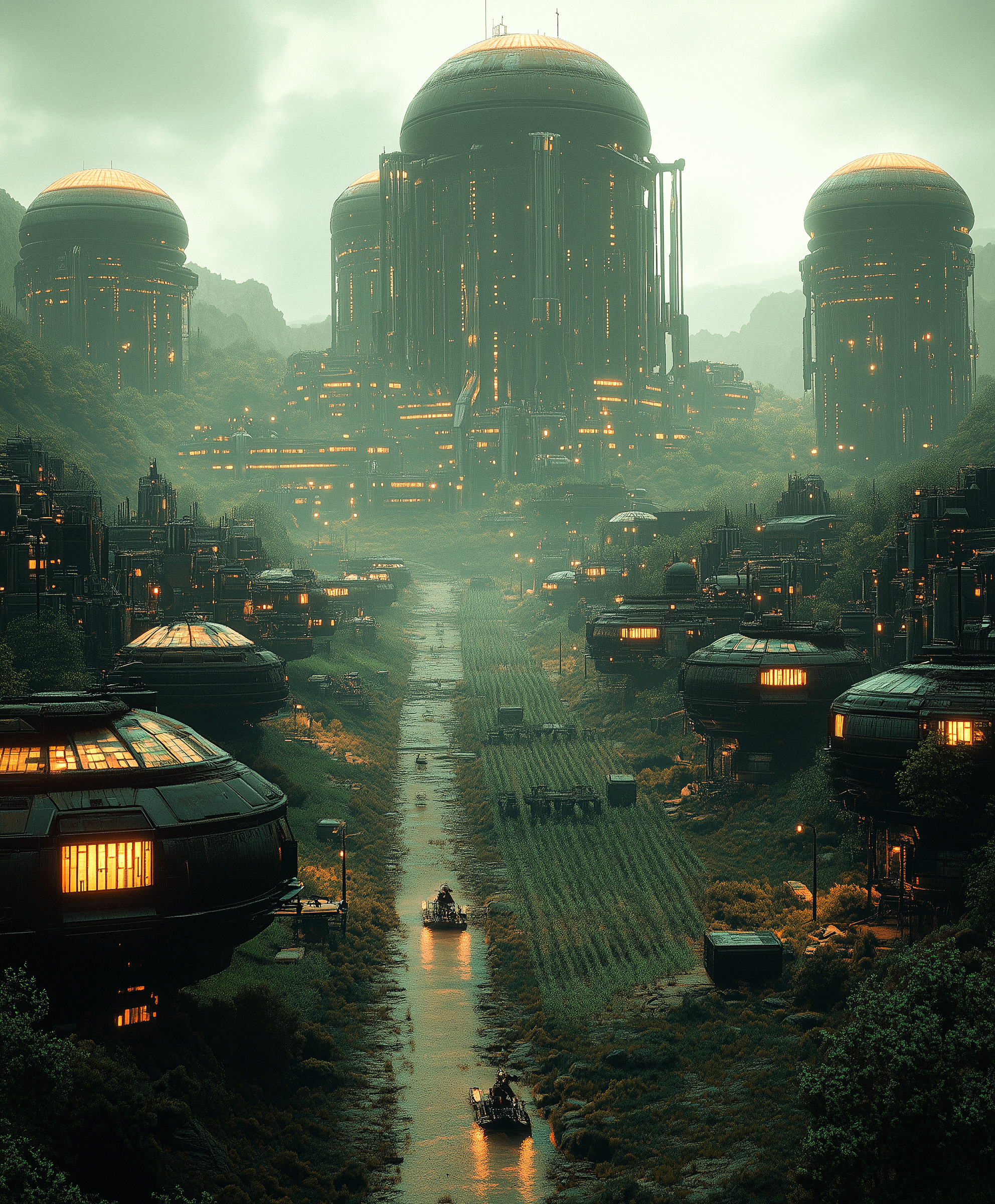
At the heart of each Mega City stands a colossal core reactor powering the hive. Grip on the cores, and the fuel that feeds them, lets the Regime keep the cities running and ration what the stacks receive. It is infrastructure and leverage. It is not, for most people, a religion.
Creative Tone & Style Guide
Genre & Influences
The particular blend: Dying Earth melancholy, an inverted solarpunk where energy can become tyranny, restrained cyberpunk texture, and a grimdark tone that never quite loses hope.
- Dying Earth — the core lineage (Wolfe’s Book of the New Sun, Vance’s Dying Earth). The catastrophe is ancient, not recent; this is a whole decayed civilization, not survivors in the ash. The world is so old its very identity — even its name, even which world it is — has faded into rumor and liturgy. Far future, low certainty about where or when.
- Dystopian Solarpunk — solarpunk’s eco-optimism turned inside out: infrastructure and “renewal” as instruments of control when hoarded by the state. Green renewal survives (the Druids, the wild, the margins) — but as resistance or refusal, never as the ruling order.
- Grimdark, but not nihilist — bleak, morally weathered, tragic — yet there is ache and dignity in it, not just cruelty. Hope is scarce and costly, never absent.
- Cyberpunk, dialed down — present in the Mega Cities’ texture (implants, surveillance, slum-tech), but not the neon-commercial, brand-saturated register. Less advertising and chrome; more rust, fog, damp concrete, and worn machinery. Decayed, not flashy.
- Not post-apocalyptic — no rubble-and-canned-goods survivalism. The apocalypse is generations gone; what remains is an intact, functioning, oppressive order built on the bones of something greater.
Mood & Tone
- Bleak but beautiful.
- Futuristic but decayed.
- Religious yet technological — with the religion still arriving, not already total.
- Tragic, human, and cinematic.
Visual Language
- Weather: Constant drizzle, fog, and acid rain reflecting neon light.
- Architecture: Crumbling arcologies, vertical slums, Spill dens, moss and wire.
- Nature: Overgrown ruins, bioluminescent plants, glowing fungi, vines on steel.
- Technology: Fusion reactors, psionic headsets, feral AIs, cybernetic fauna.
- Color accents: State branding leans orange where it shows; rebellion blue; wild renewal green. These are palette notes, not a sacred cosmology most people live inside.
Stylistic Cues
- Use dense sensory writing — rain on metal, hum of reactors, flicker of light on wet concrete.
- Treat power and control as the primary political symbols; dawn/light language belongs to Regime branding and those who mock it — not every sentence.
- Let language feel worn — poetic but world-weary.
- Describe humans as small against vast systems — both physical and political.
- Merge religious tone with science-fiction vocabulary where the new piety is growing (“prayers in data,” “machine saints,” “dreaming circuits”) — and keep ordinary speech plainer in Gen Pop and the Spill.
Summary Vibe
A decaying world bound by fear, infrastructure, and habit. Long after the Collapse, an autocracy that rose from chaos calls itself the morning — while prophets dream, rebels strike, and the masses decide, day by day, whether order is still worth the boot.