Fine
FINE — Anthropology (working title)
The perfect working-class escape. Legal, corporate-owned, tolerated, normalized — consumed nightly by millions.
Overview
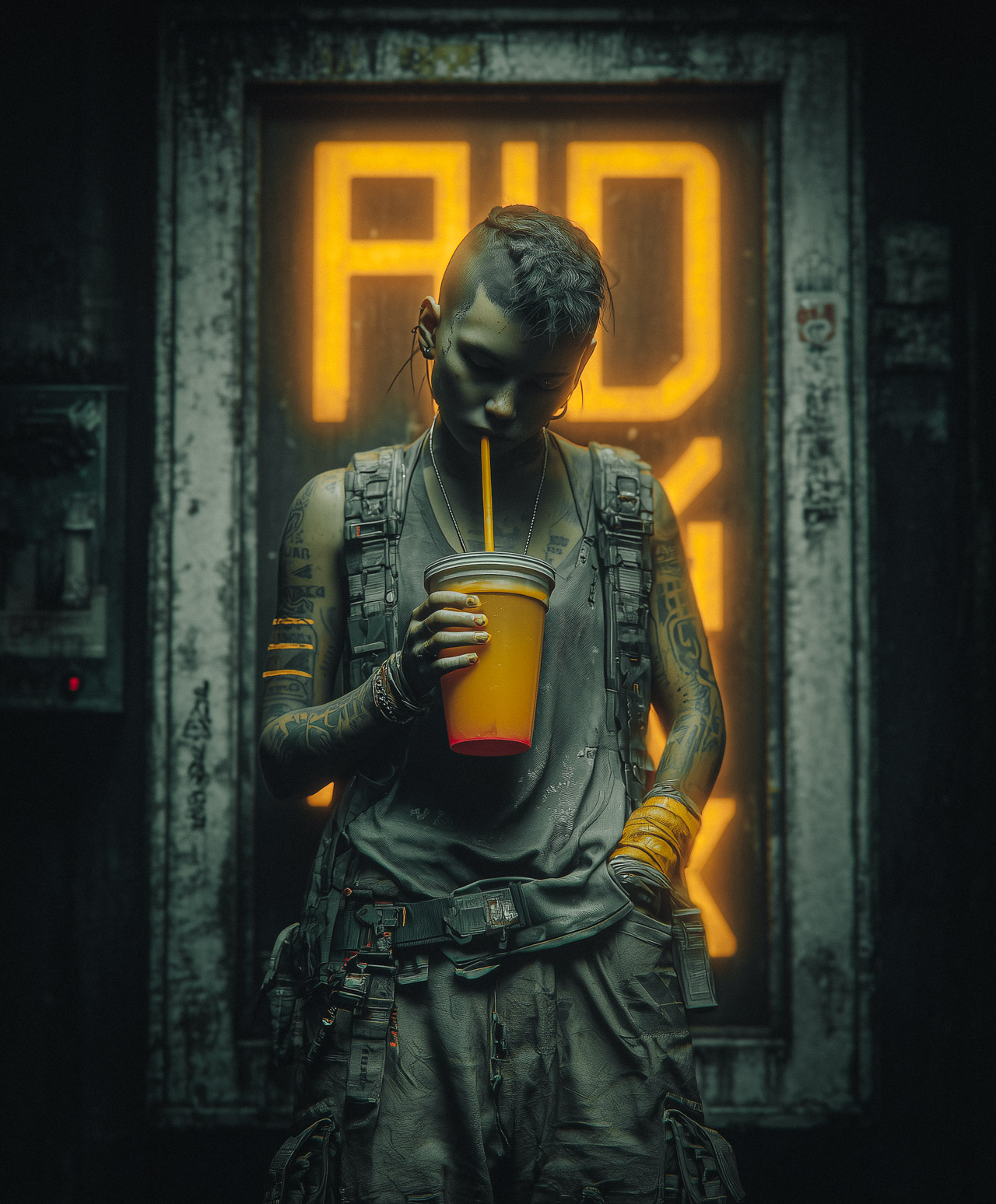
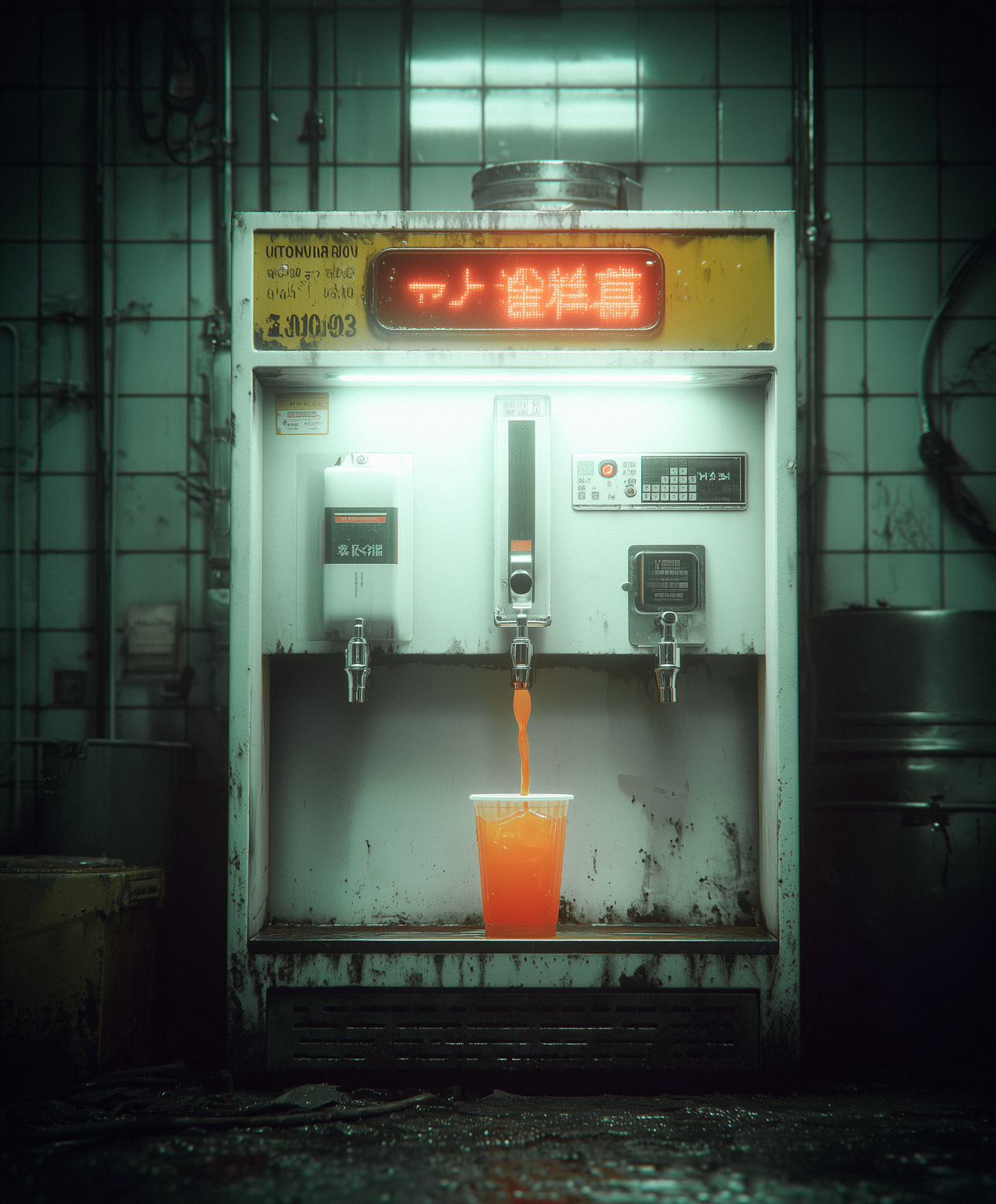
FINE is a legal, corporate-owned narcotic drink sold across the megacity, dispensed from self-service machines that resemble oversized soda fountains. Syrupy and slightly viscous, it pours into cheap plastic cups — ubiquitous in the gutters, markets, and alleys of the sprawl.
Its effects are subtle but insistent: a narcotic haze, a loosening of anxiety, a dreamlike euphoria that lingers just long enough to take the edge off poverty and despair. Withdrawals are mild compared to harder drugs, which is exactly why it works as mass pacification. Not outlawed. Not glamorous. Just there — the nightly soft landing for people who cannot afford a harder one.
Distribution
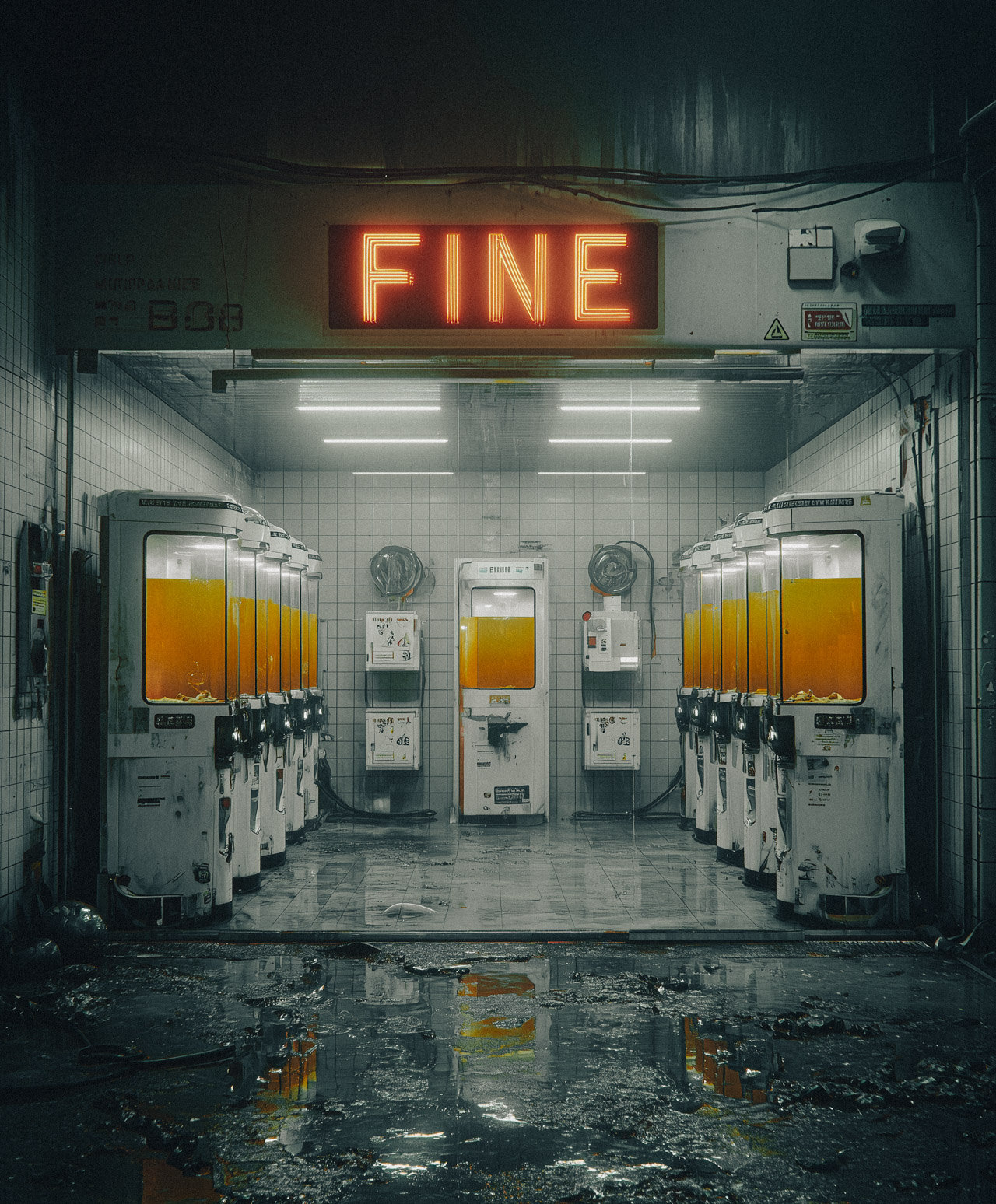
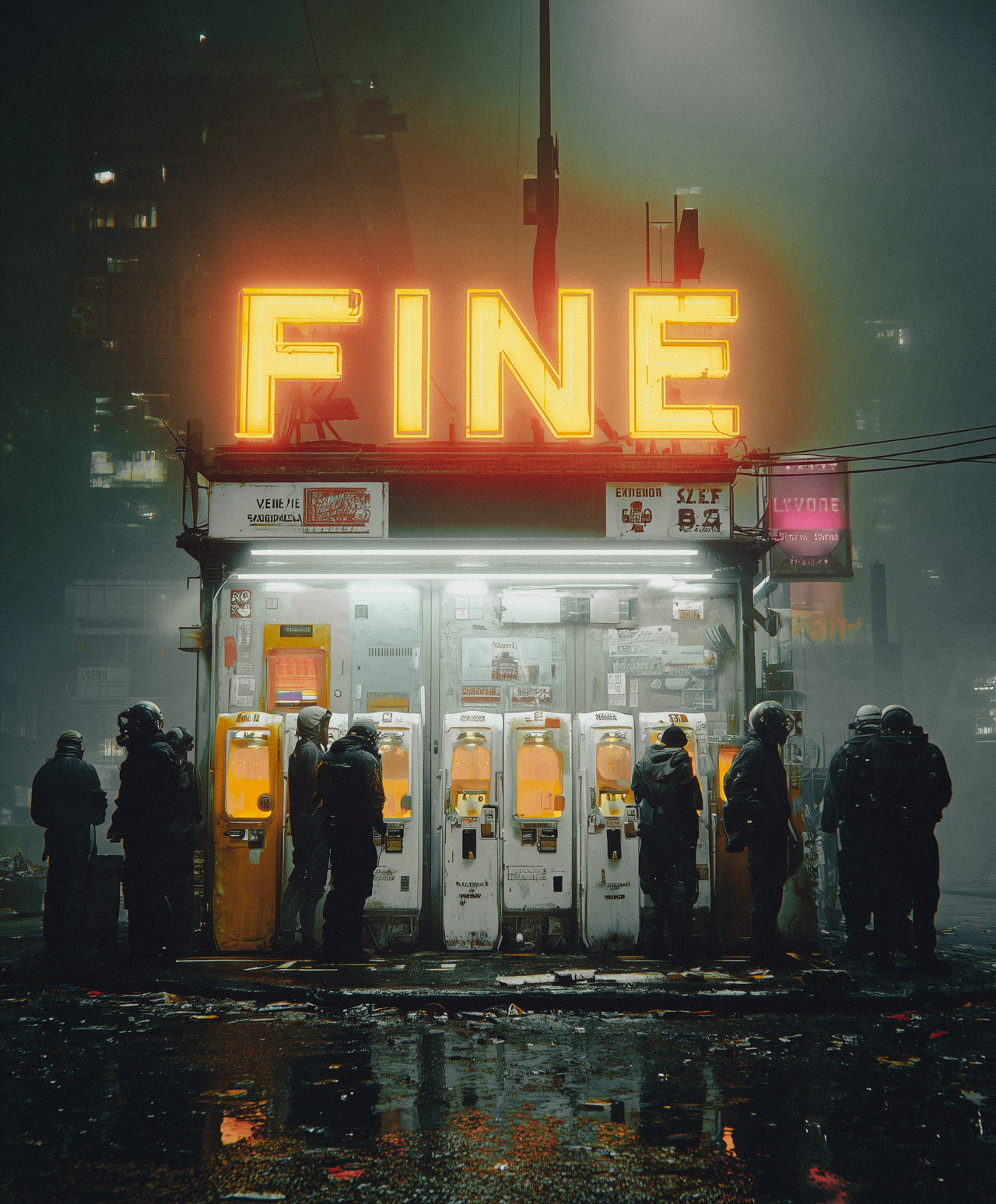
Every slum block has a kiosk lit like a beacon — harsh fluorescent light spilling from cracked tiles and graffiti-scarred walls. Inside: row after row of identical machines, each serving different flavors of FINE in muted colors. No snacks, no cigarettes, no distractions — just the drink.
Social Role
FINE sits at the intersection of commodity and control: a corporate product that makes grinding urban life endurable without requiring the state to put a boot on every neck. Whether the Regime merely tolerates it, licenses it, or quietly depends on it is an open question — but a city of mild euphoria is easier to govern than a city of sharp despair.
The White Dog
Long-time users associate FINE with the image of a white dog — sometimes a wolf, depending on who is telling it. Not a logo on the cup today. Not an ad in the kiosks. Just a thing that arrives after years of nightly pours: in the haze, at the edge of sleep, in the fluorescent glass when the machine finishes dispensing. Newer drinkers do not report it. Veterans do, and they stop being surprised by each other.
No one agrees why.
Street archaeology says the early brand once used a white dog — loyal companion of the working block — and scrubbed it when the corp cleaned the mark. The formula, or the habit, kept teaching the image after the art was gone. Others swear it is withdrawal: mild, yes, but stamped with the same pale animal every time. A few call it something stranger and will not finish the sentence. Corp denies any of it. The Information Bureau does not comment on soft drinks.
Whatever the cause, the association has leaked into the alleys. In the slums, white dogs are left alone — not worshipped, not fed as ritual, simply not kicked, not stolen, not used for bait. Many become companions. You do not raise a hand to a white dog if you have been drinking FINE long enough to see one with your eyes closed. Whether that is respect, superstition, or a quiet fear of recognizing yourself in the animal is left unsaid.
Dog or wolf depends on how kind the night has been. The domesticated reading is loyalty — FINE as the friend that always shows up. The hungrier reading is the leash story with the leash torn off.
Open Threads (to expand)
- Who owns FINE — a Regime subsidiary, a licensed megacorp, or something that only looks independent?
- Was there ever really a dog on the old packaging, or is that the story people invented to make the vision make sense?
- Is the formula chemically related to anything the Jesuits or Information Bureau use for conditioning, or is that street paranoia?
- Do Resistance cells treat FINE as the enemy’s pacifier, or do fighters drink it too — and do they see the dog?
- What happens to a block when the machines go dry — and do the white dogs notice before the people do?