








Corvée Artwork
Corvée
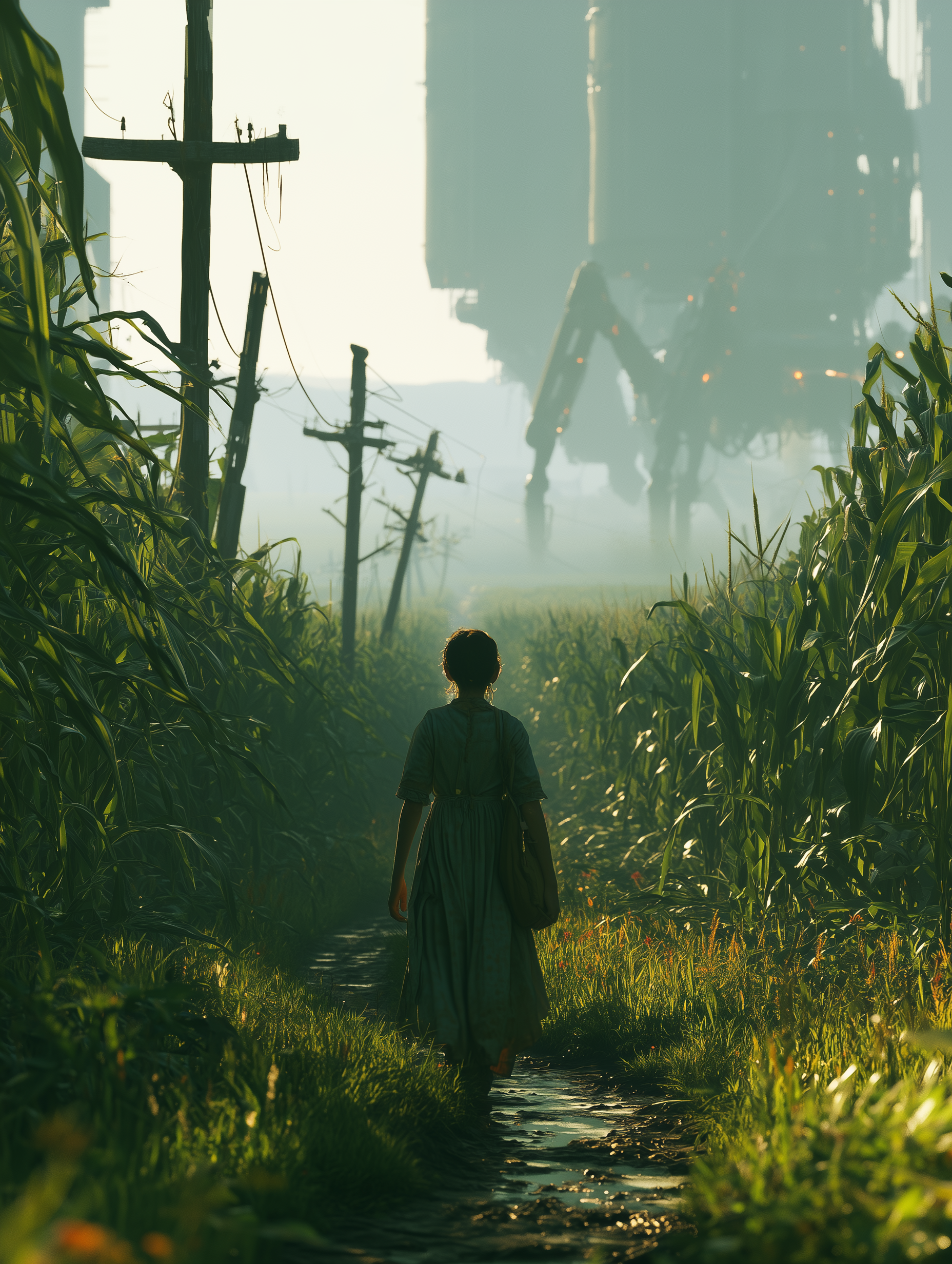
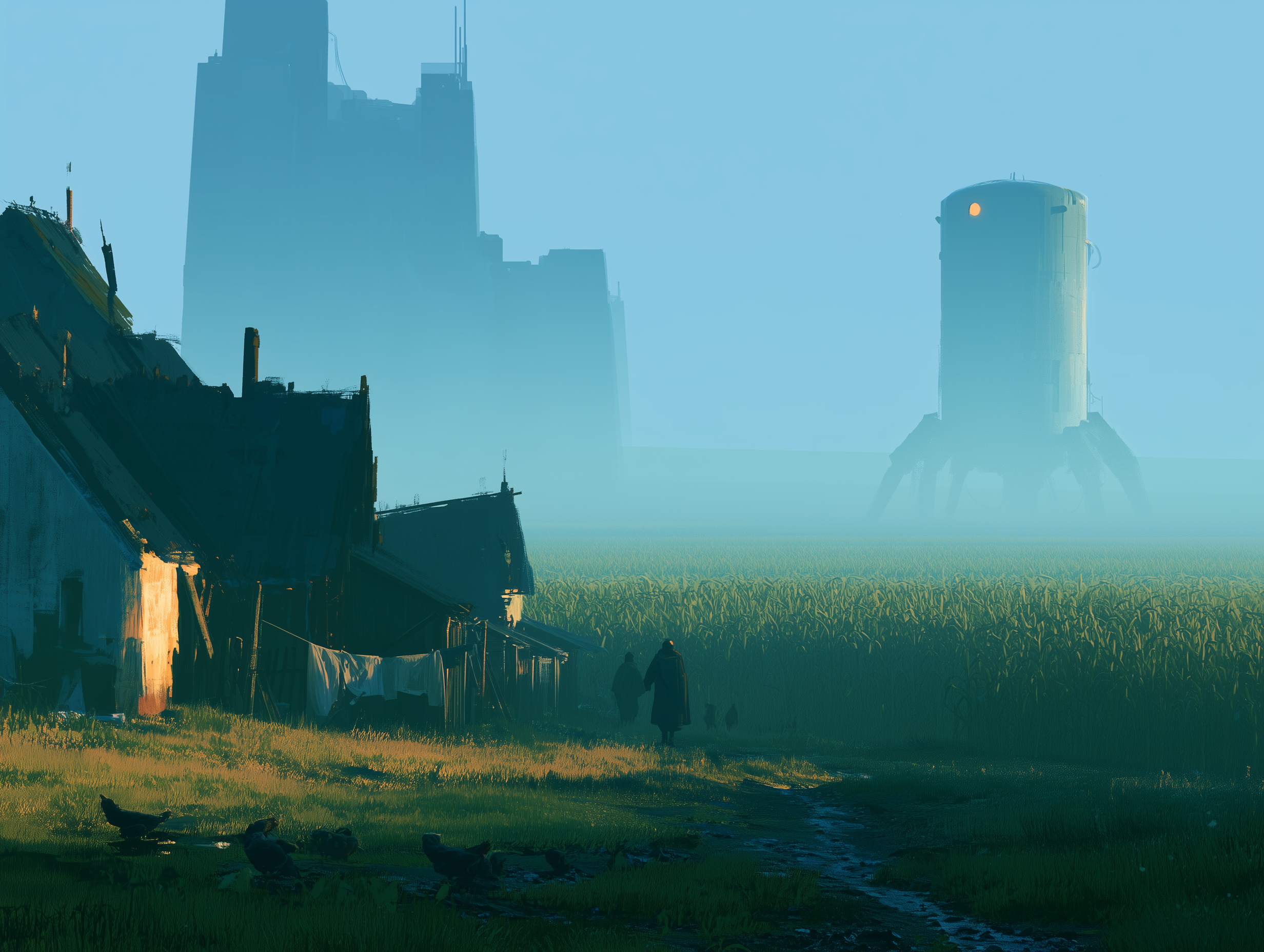
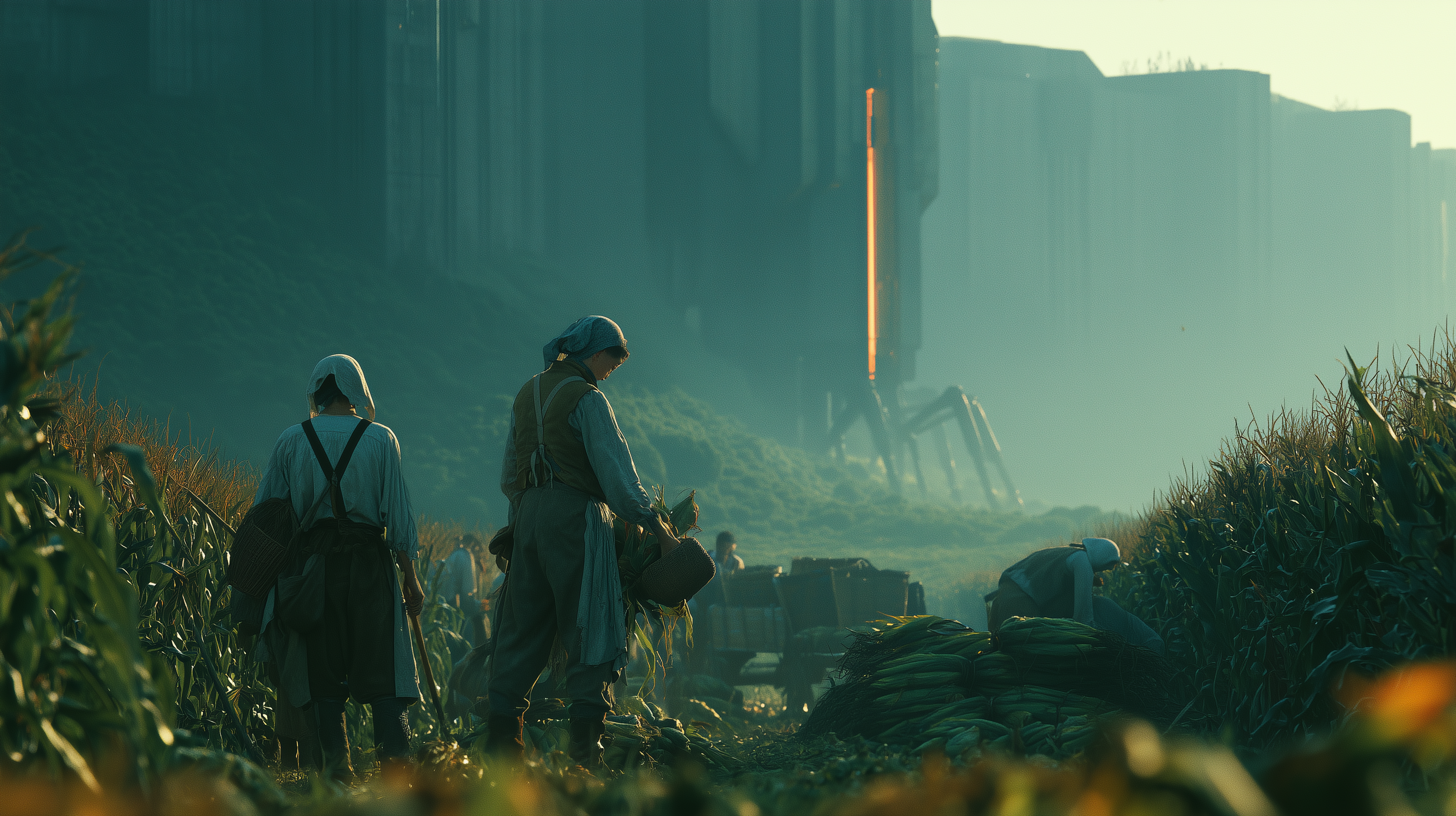
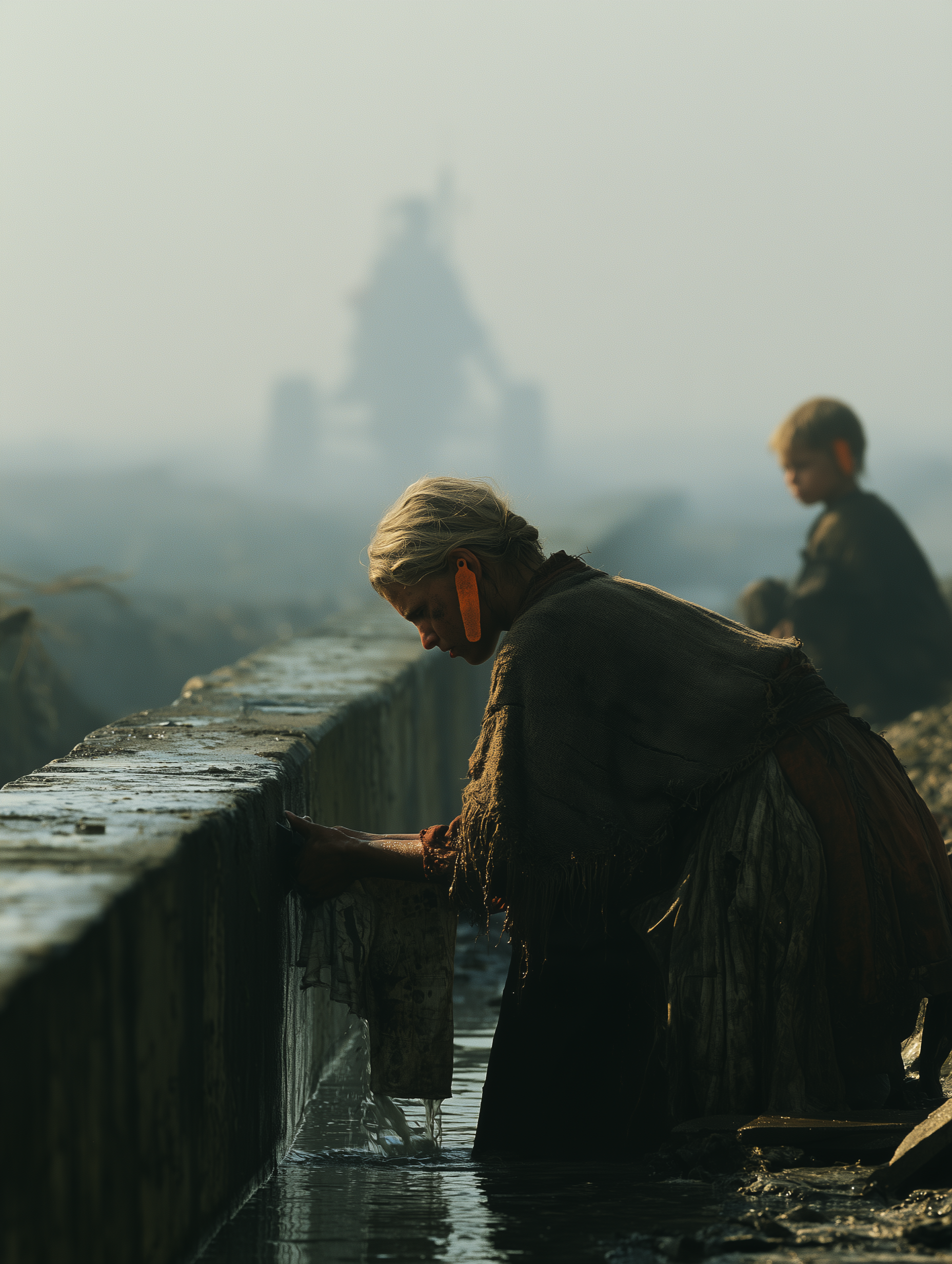
The Corvée are the generational unpaid labour who toil in the sprawling Agfields south of Megacity One. The life of the Corvée is pastoral — poor, and in some respects lacks the desperate squalor of the city’s urban tenements, but it is far from free.
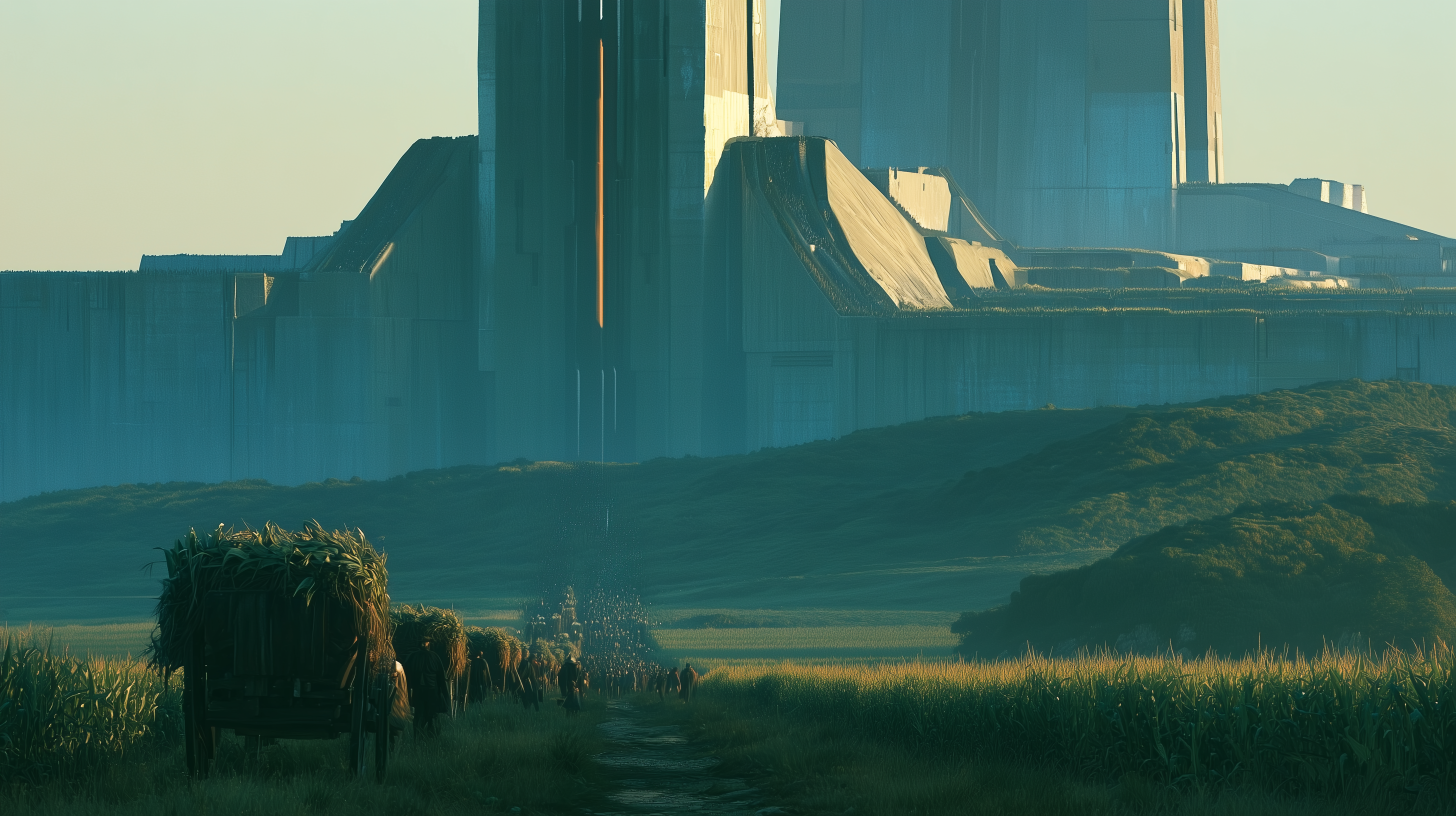
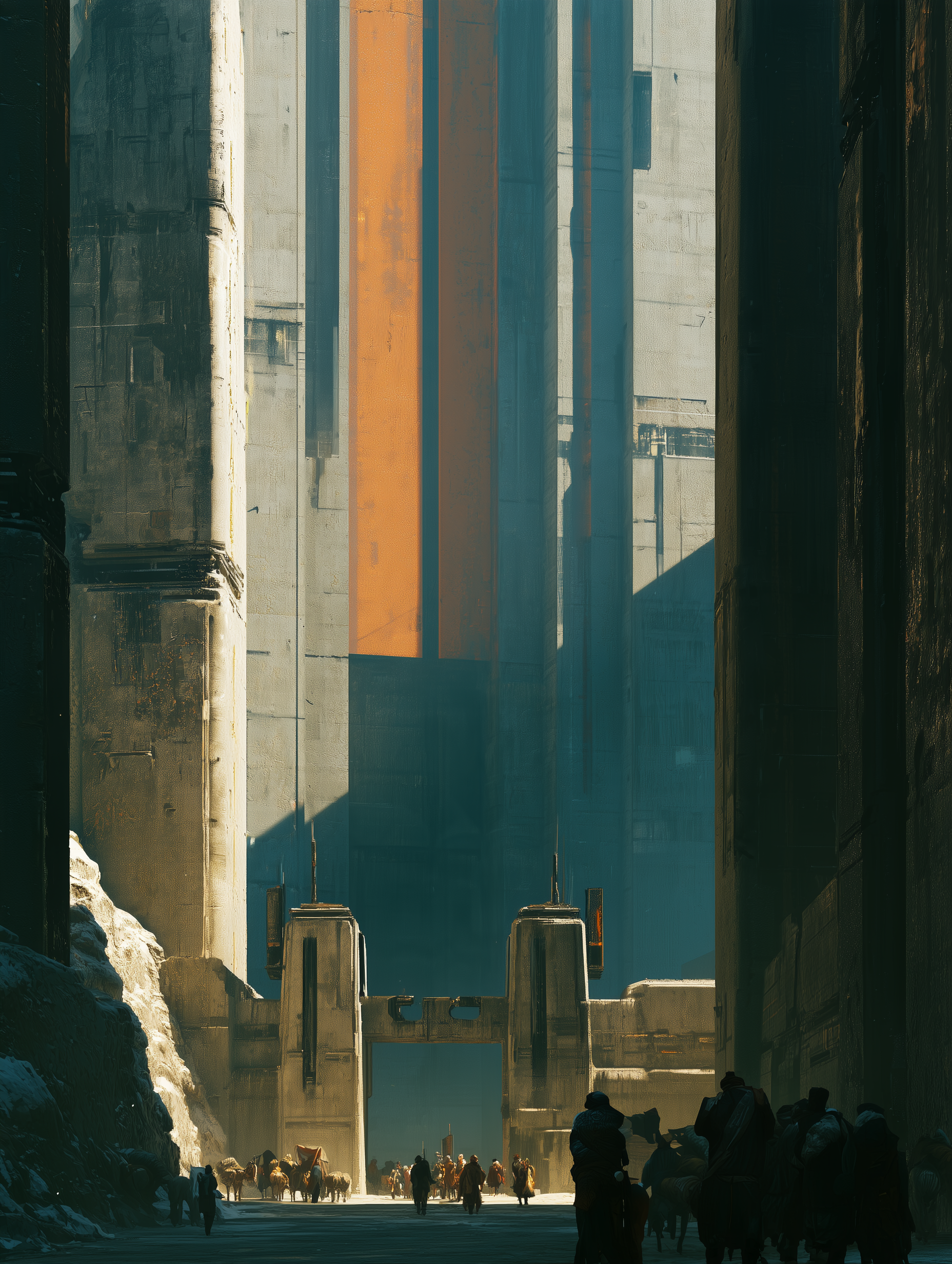
The Agfields run to the horizon, from the walls of the megacity to the deserts where industrial irrigation networks finally run dry. Giant industrial harvesters stalk the fields, providing the calories for the masses of the cities.
Each Ag sector has its own banal overlord, charged with security, logistics, and bringing in the harvest. The Regime’s elite consider them provincial. They compensate with giant neo-feudal citadels, and rule the Corvée with an iron fist. Their arrogance has nowhere to go but down.
The Tag
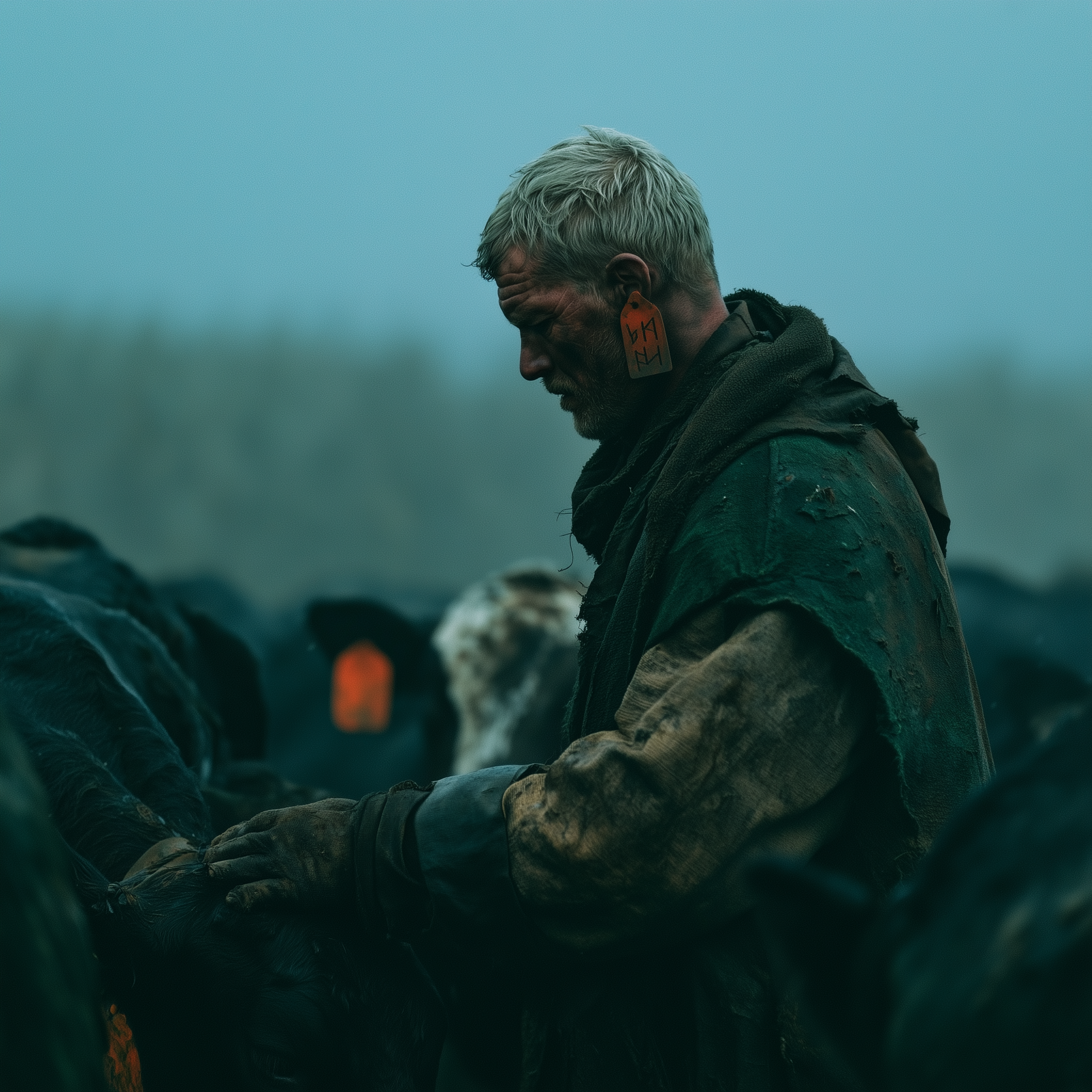
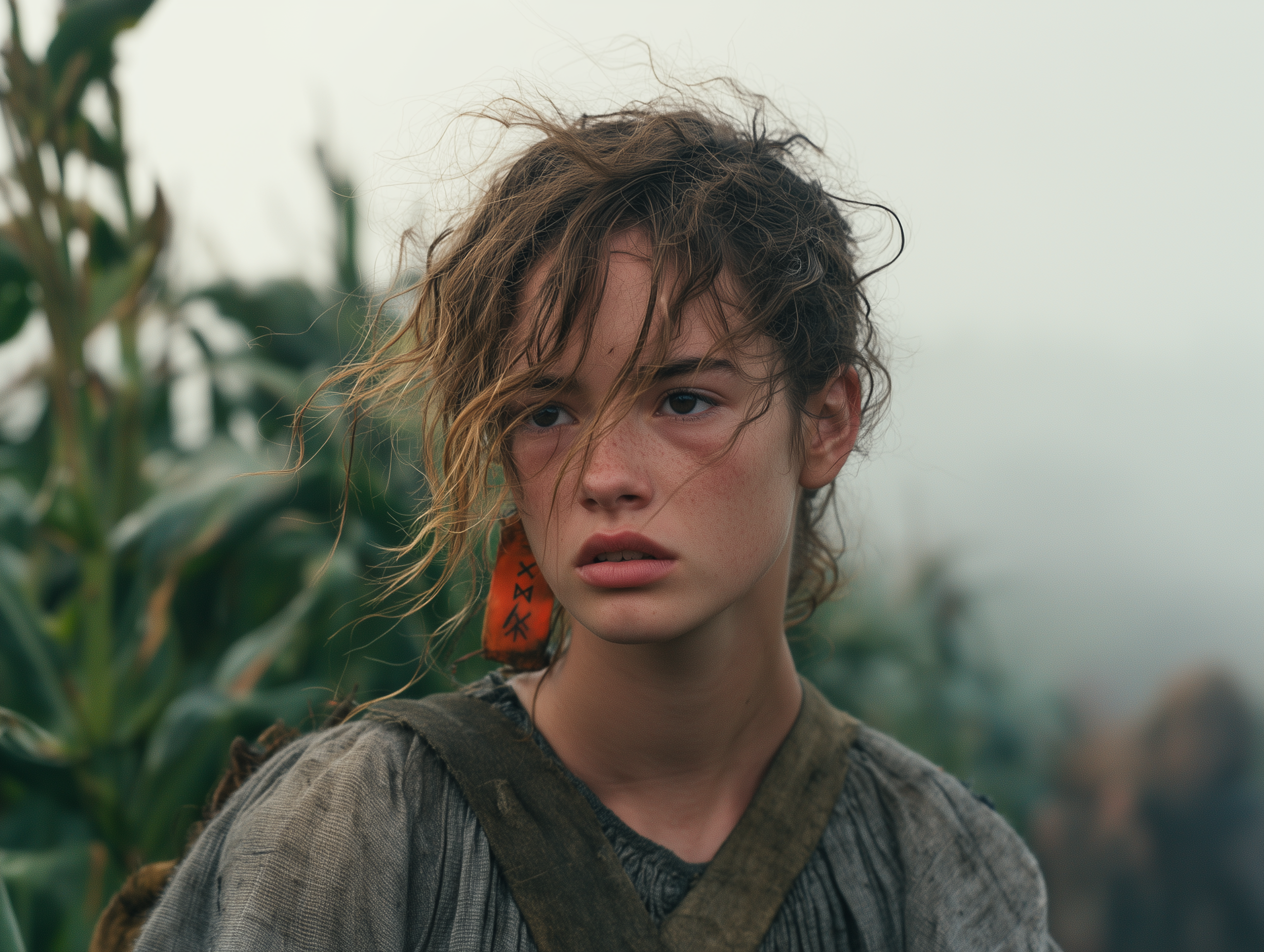
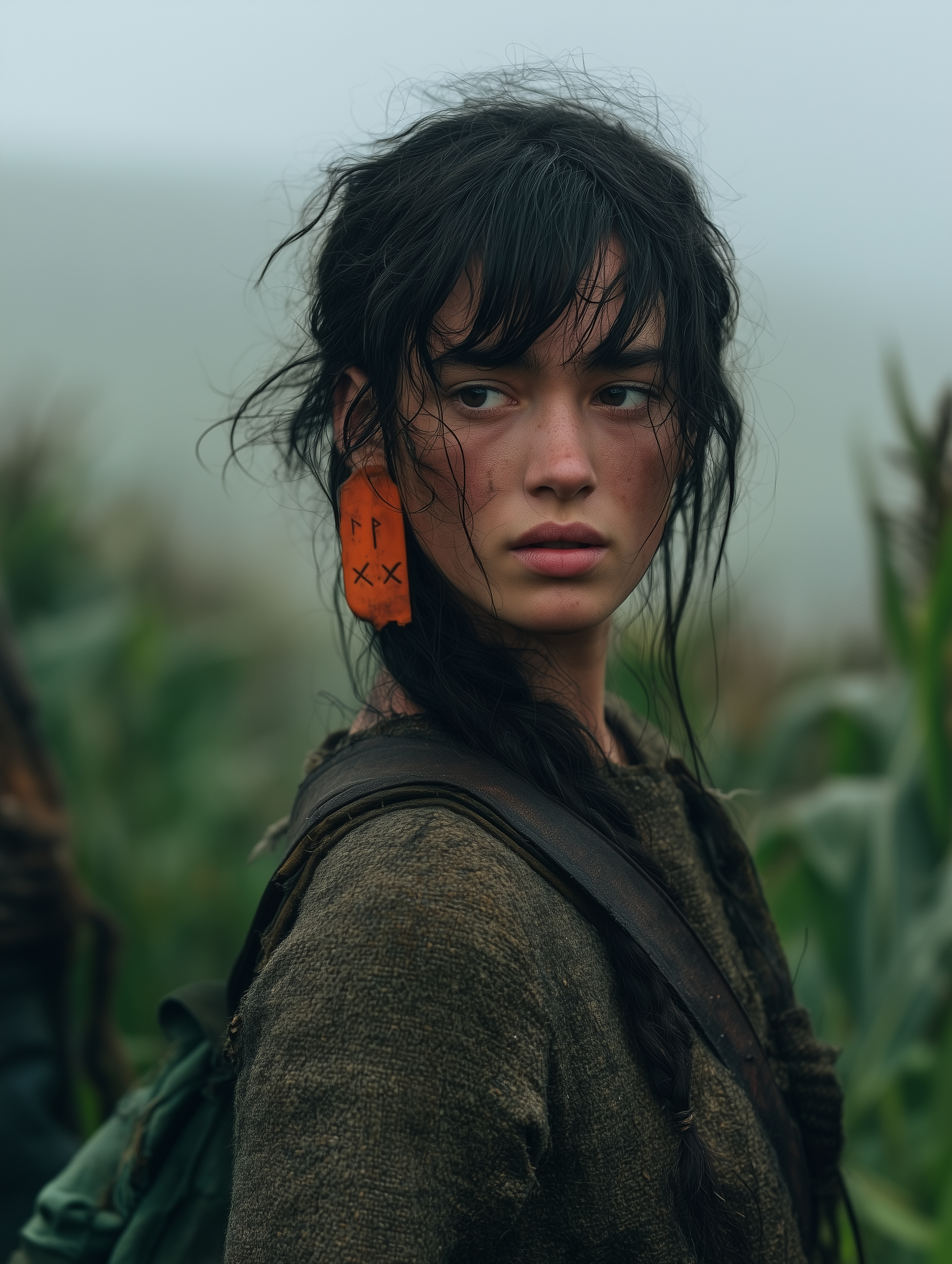
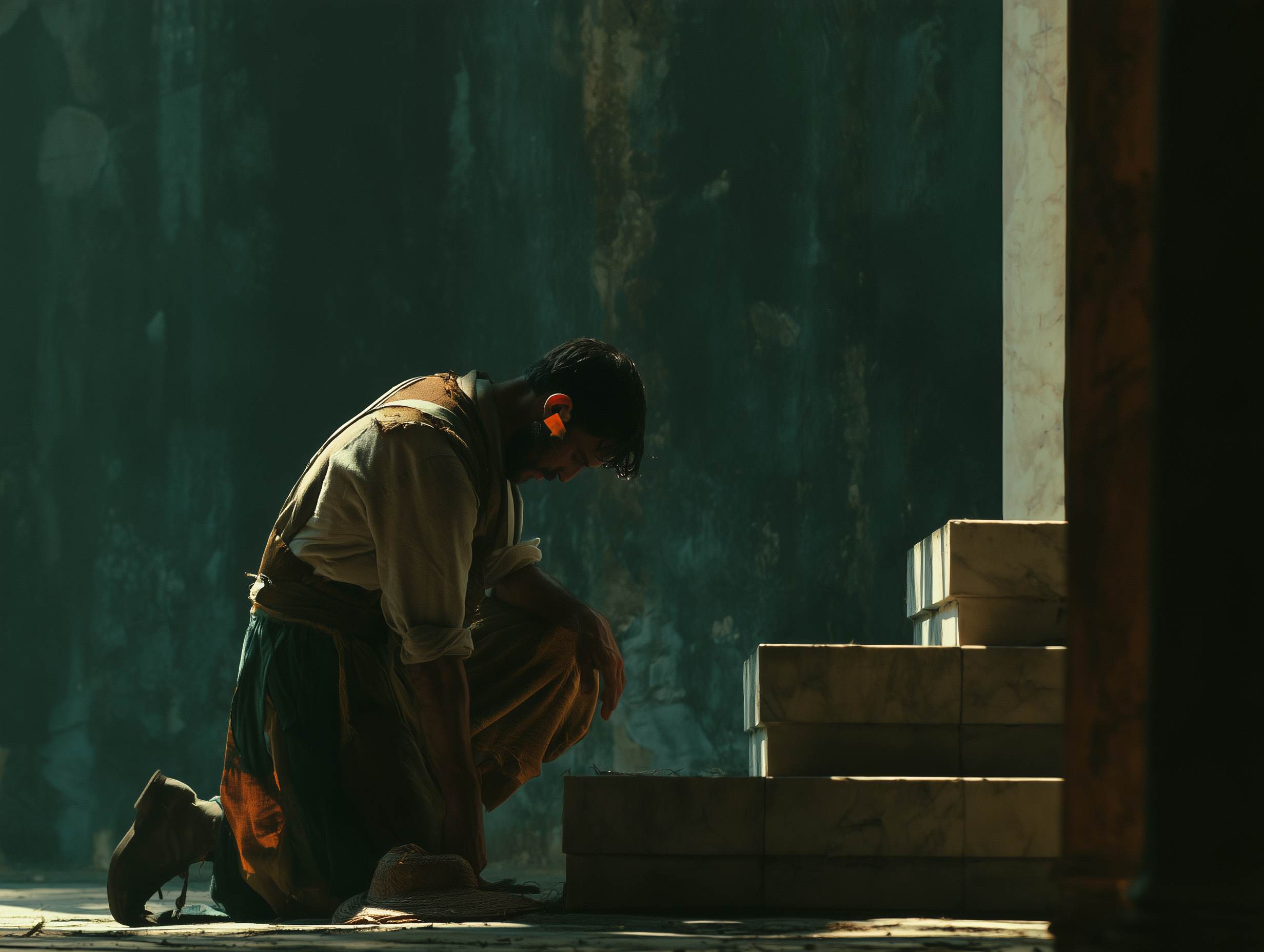
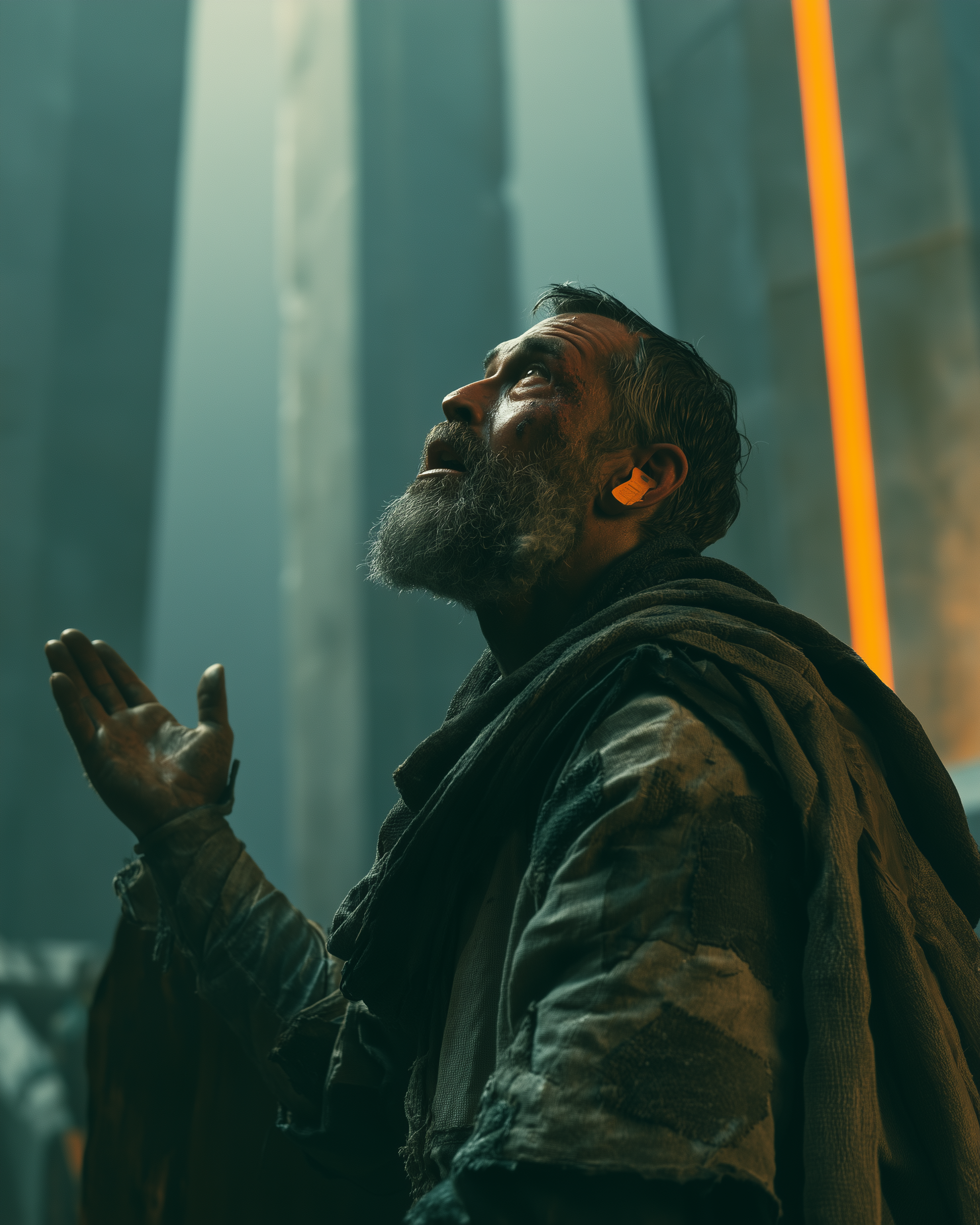
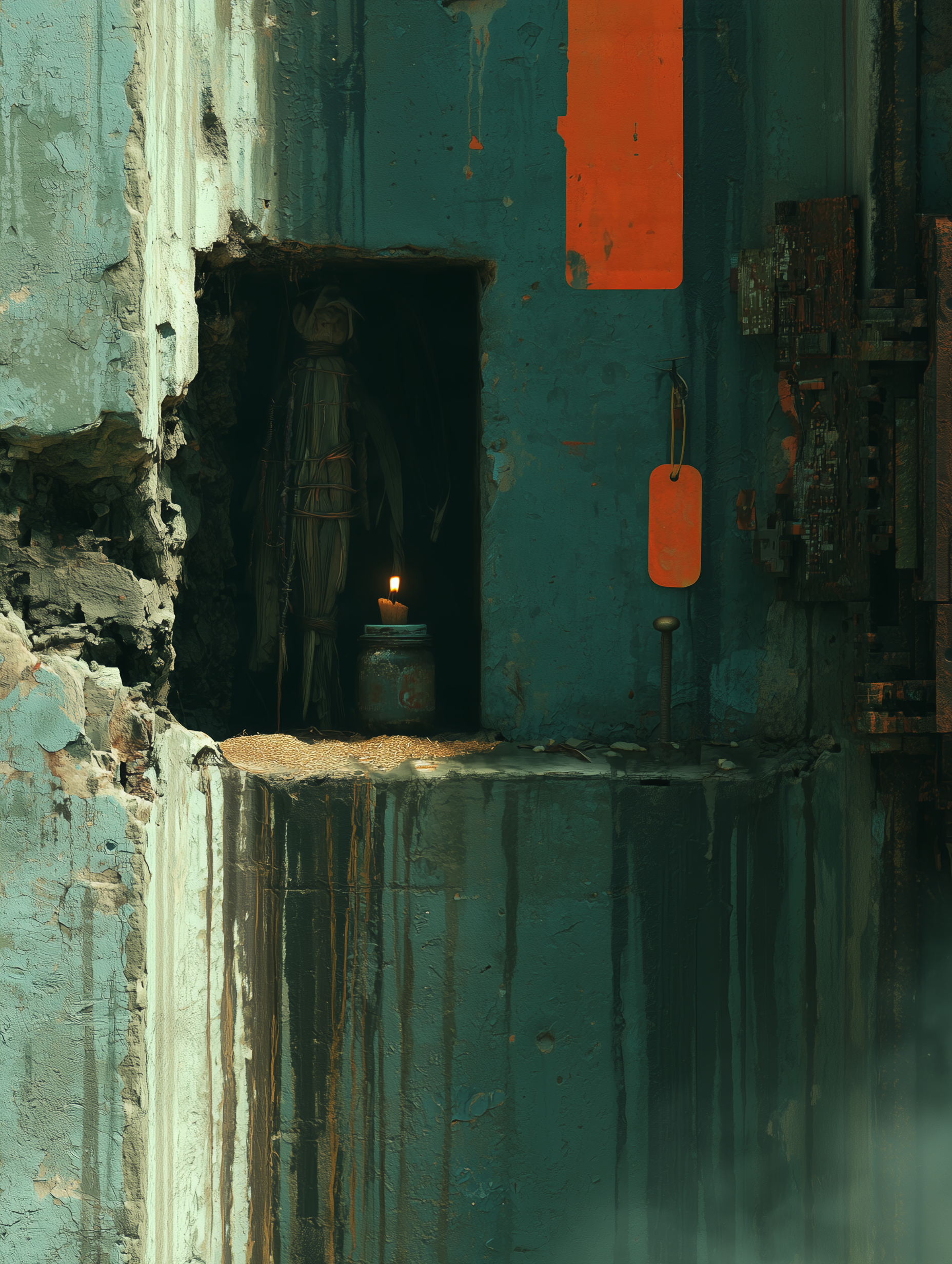
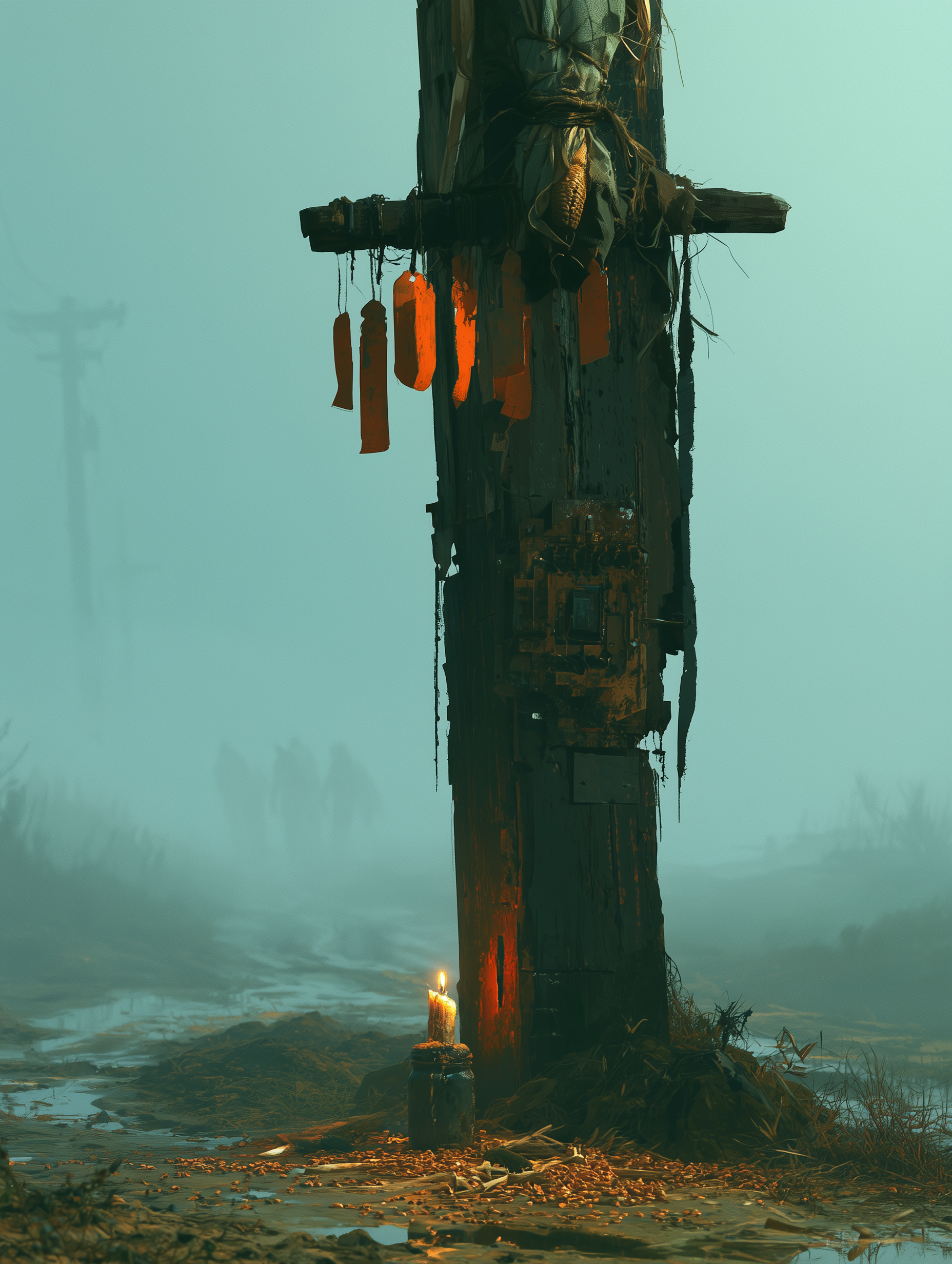
Every Corvée wears one: a tab of orange plastic punched through the ear, the same clip a farmer snaps into the ear of a calf.
There is the official story, and it is even half true. The Agfields are vast and rural, and out here the machinery of watching does not hold — the towers stand too far apart, the maintenance never comes, and a subcutaneous chip is a poor thing to verify across such vast open distances.
But that is not the real reason.
The real reason is that the banal lords are small men. They could have chipped the Corvée. But they chose the ear. They chose the ear. They marked them the way you mark livestock, because it made them feel like lords.
Each sector keeps its own color. That is the only thing that changes from field to field. The tag itself never does.
The Accumulators
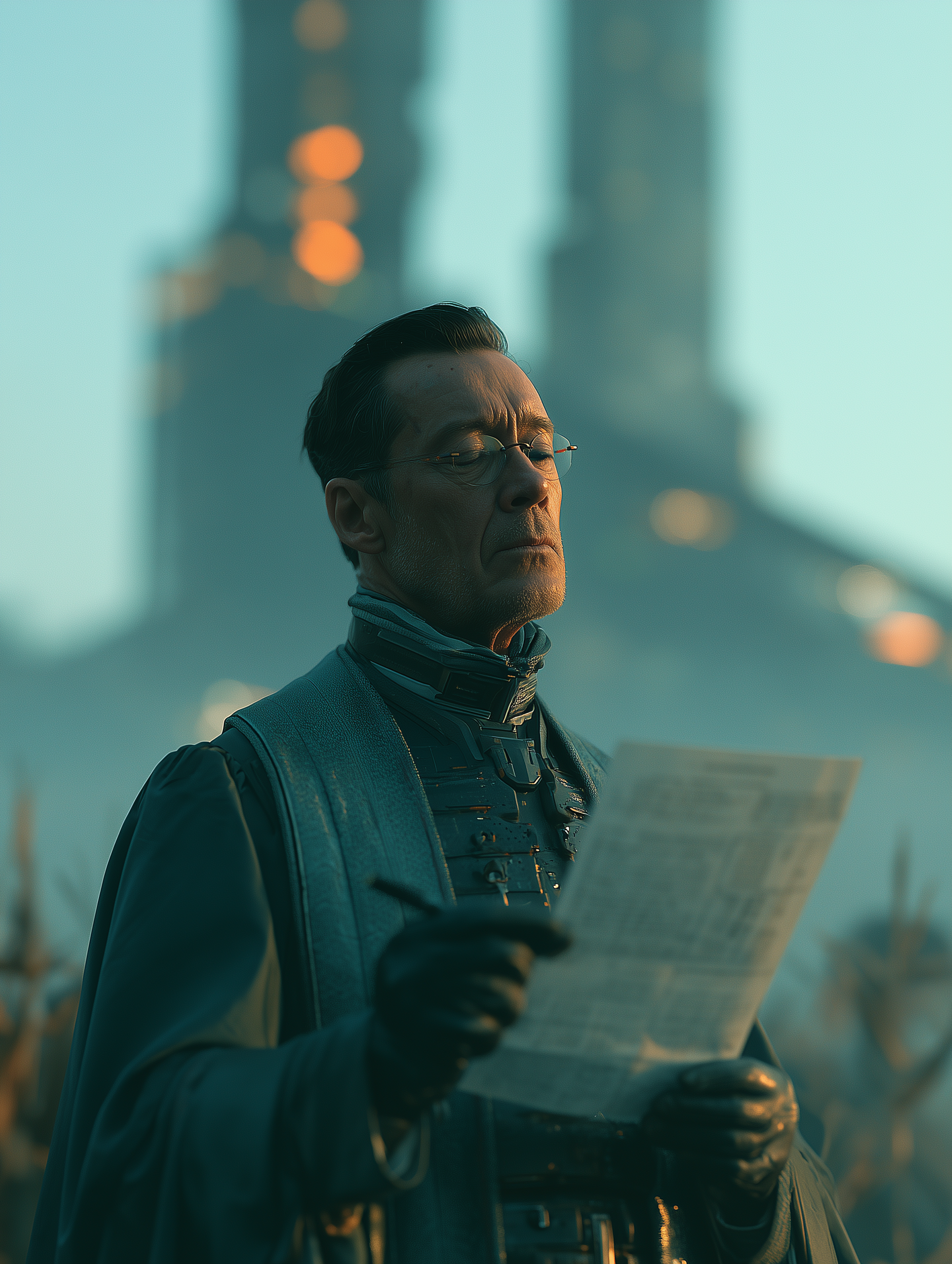
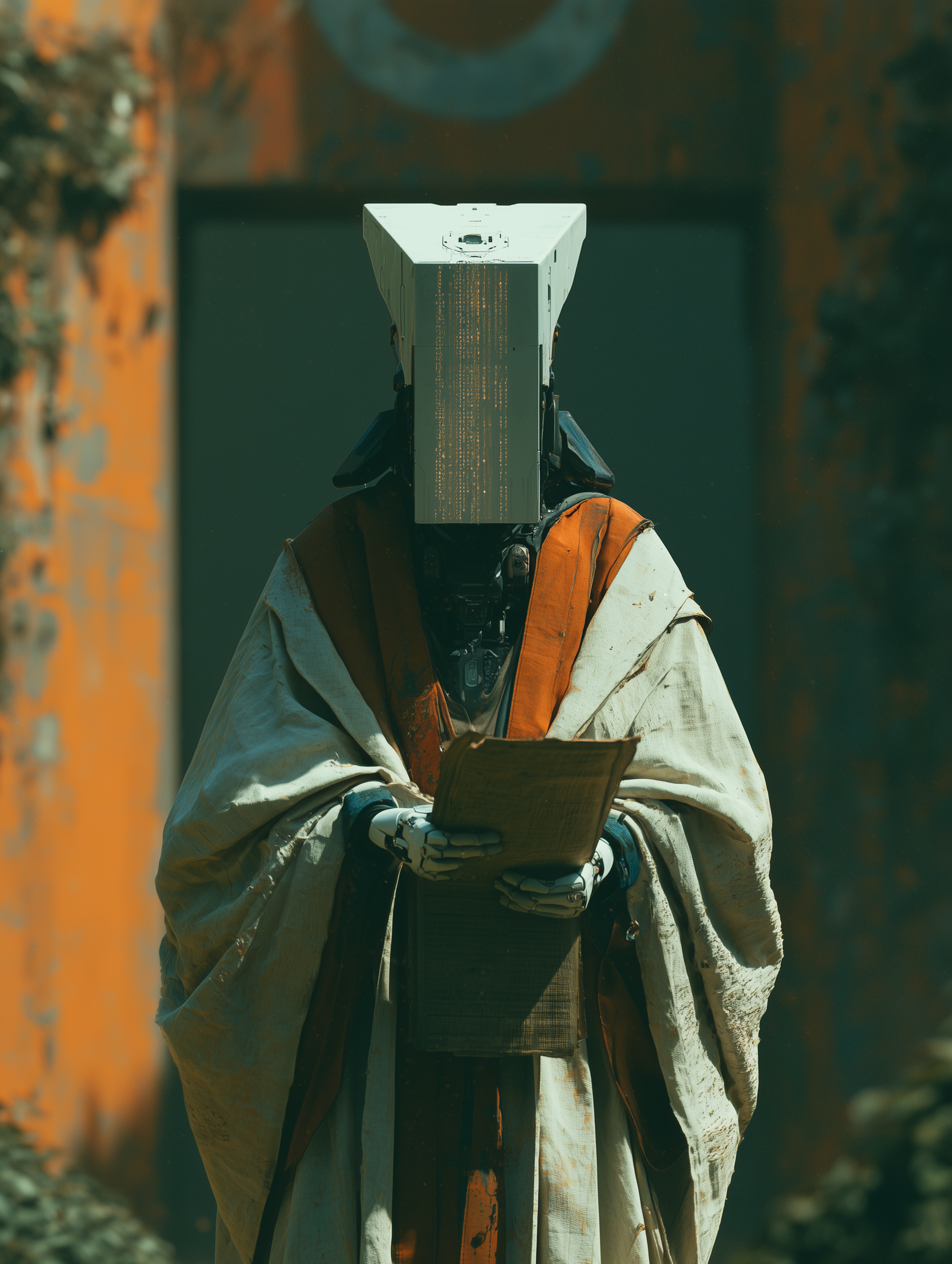
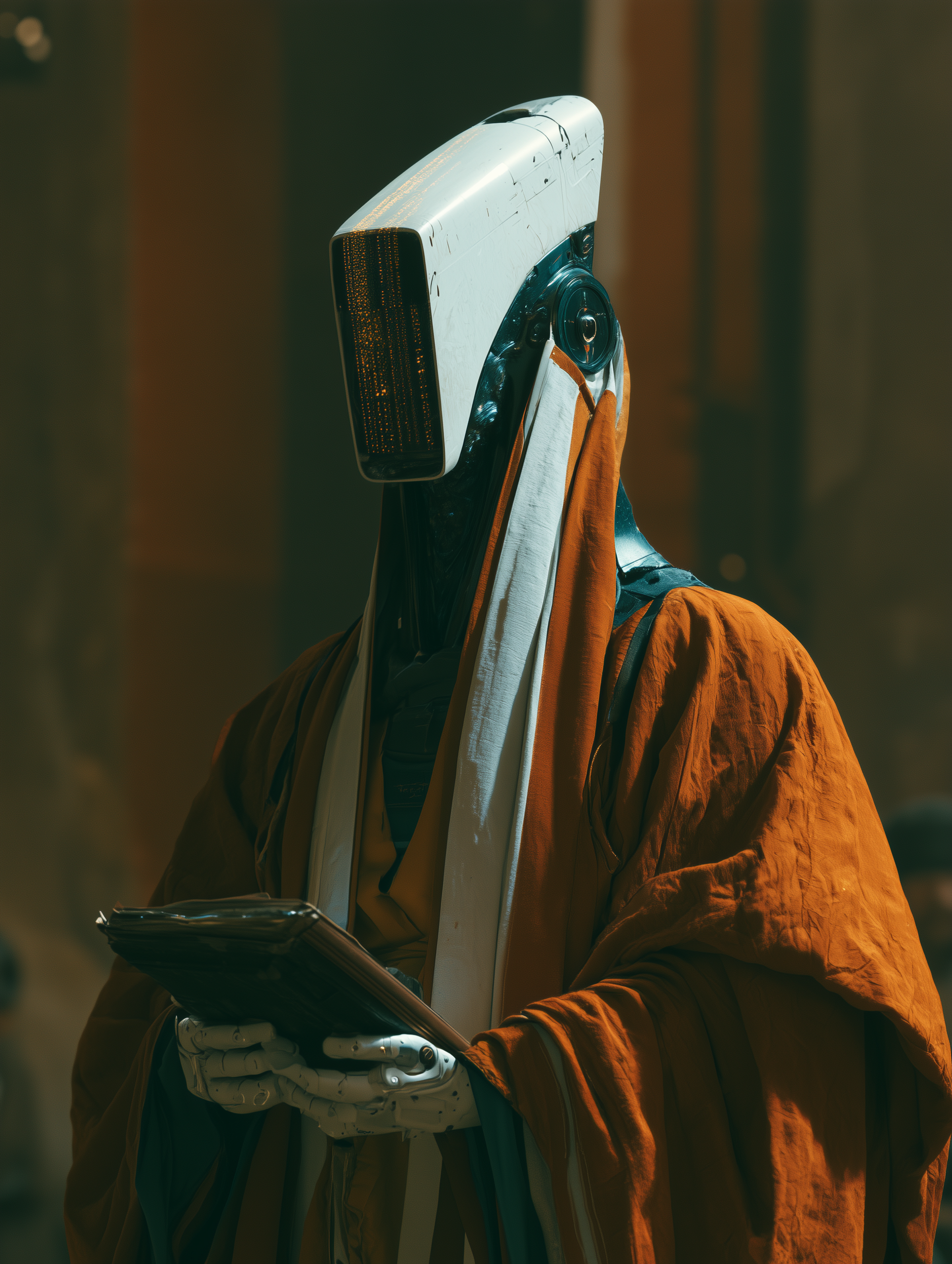
The keeps have no Jesuits, and no share of the Oracle’s sight. The hive will not lend foresight to men it already declines to seat — those who could glimpse the future might change its course. So the Banal Lords take what they are allowed: Accumulators. Androids who calculate instead of dream, priest-clerks of yield and water and days owed.
Elsewhere the guild is tolerated at best. Here they are elevated. A lord who cannot summon a vision can still summon a sum, and the harvest is a problem of numbers before it is anything else. The court seats them near the ledger. Prestigious in their own way. Priestlike, even, if the priesthood is arithmetic.
The Court
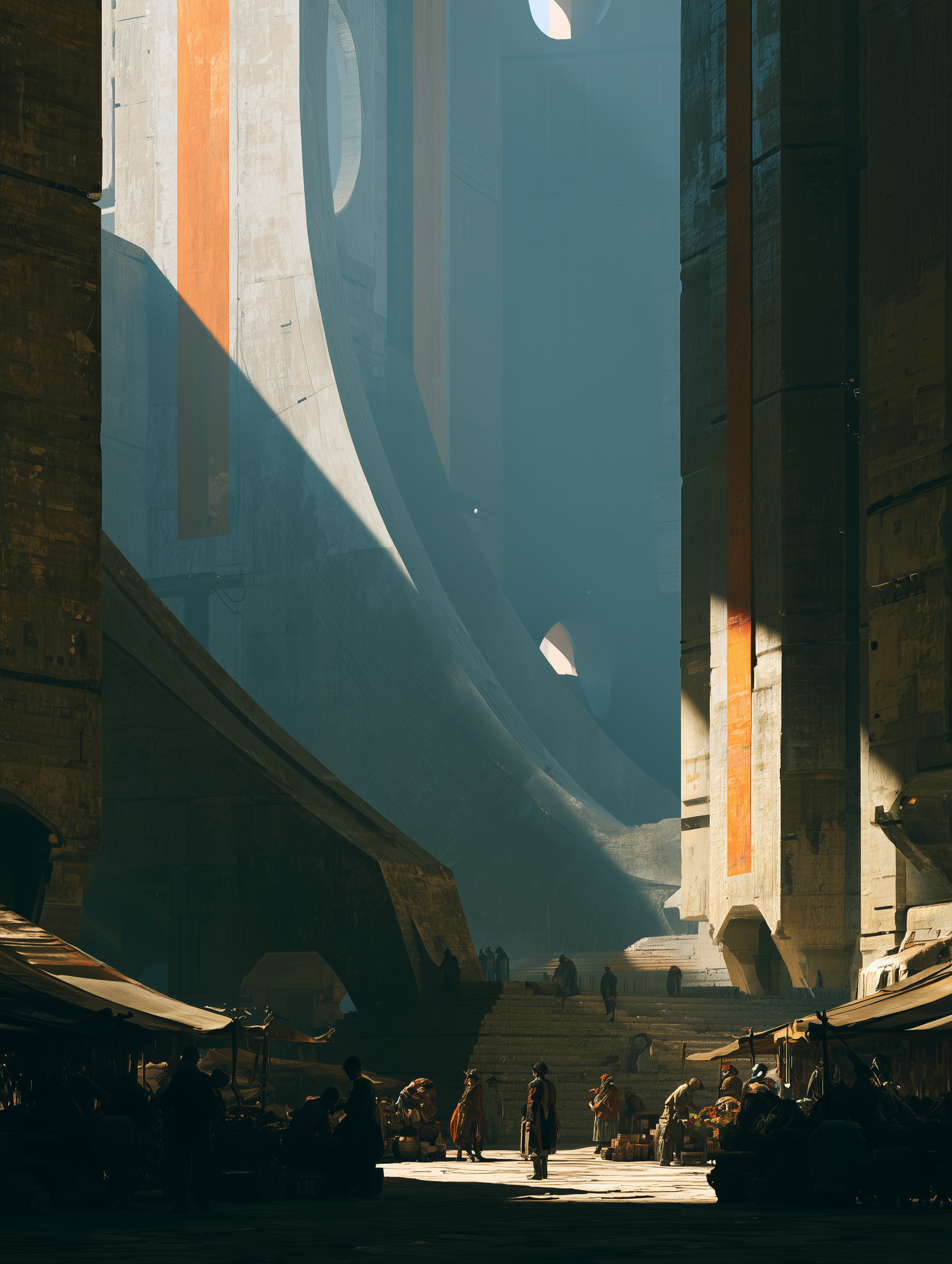
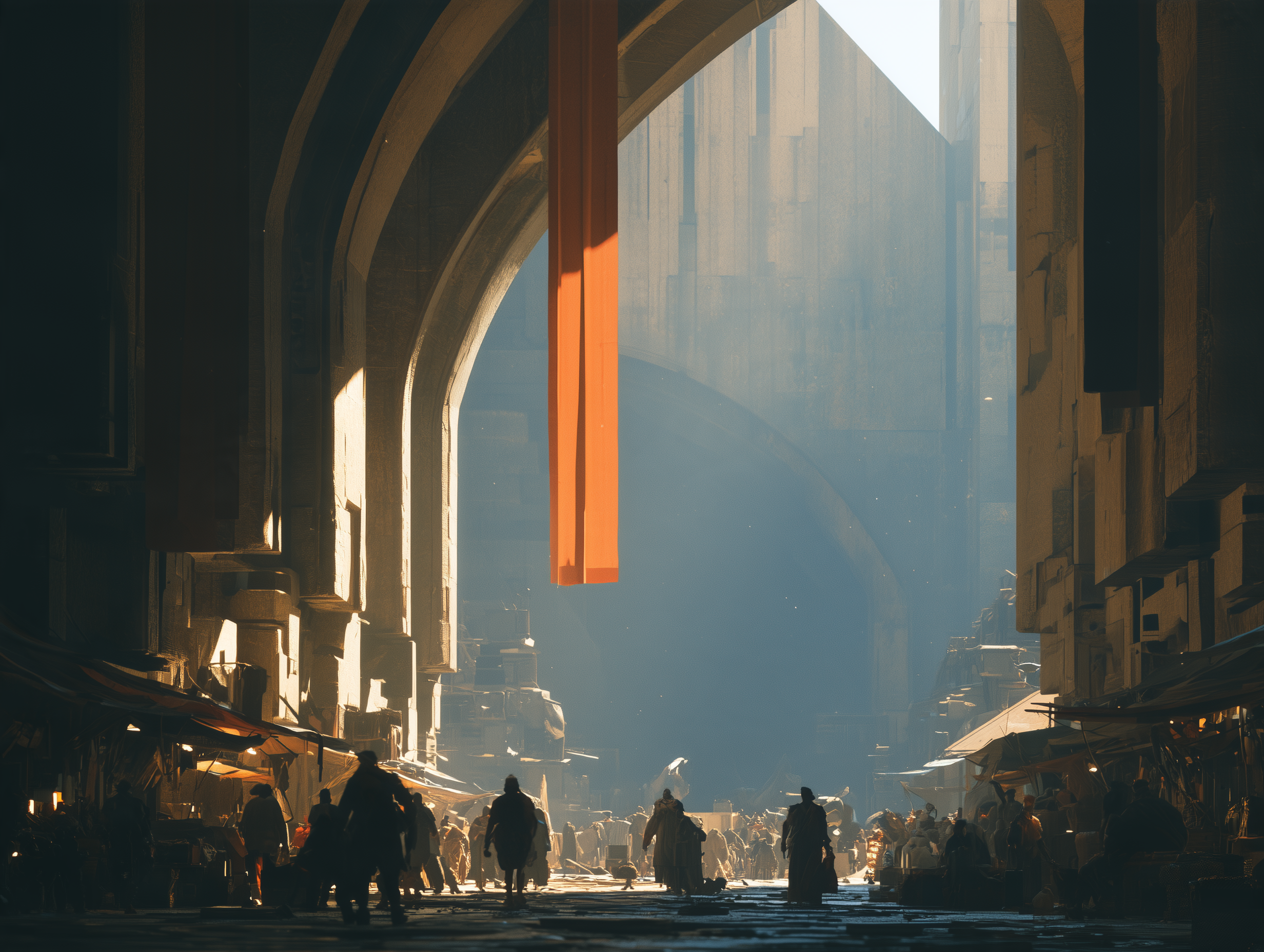
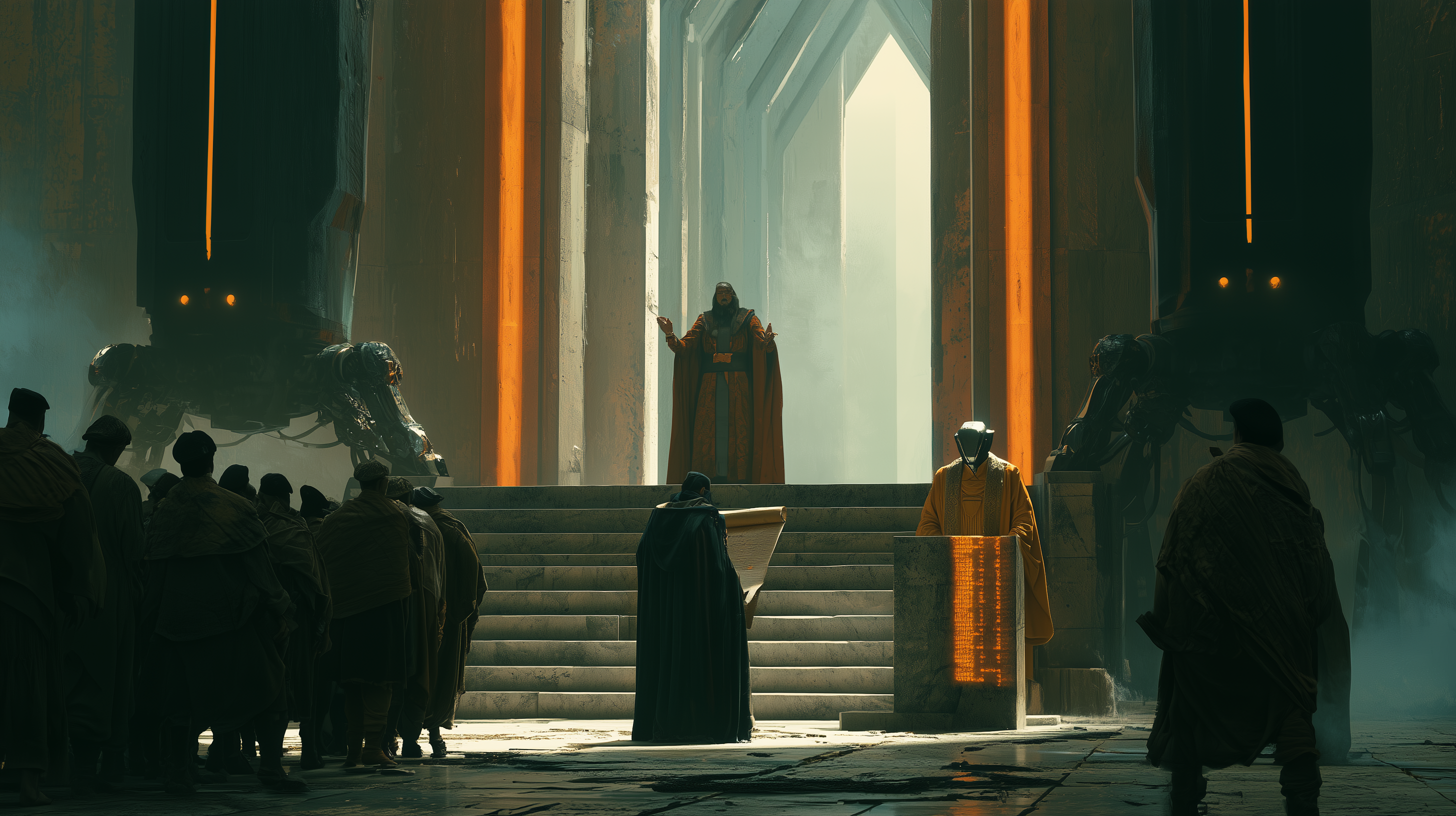
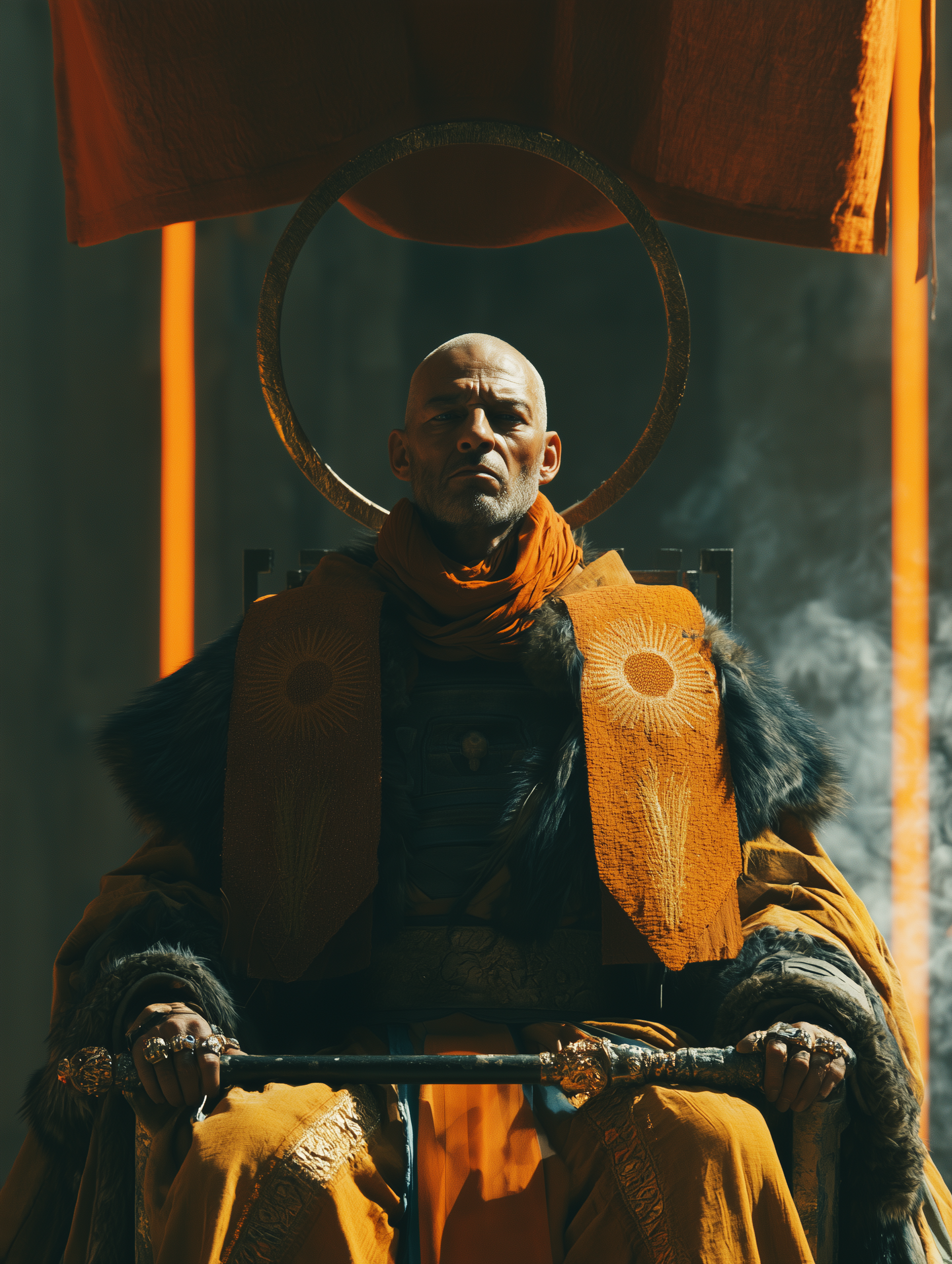
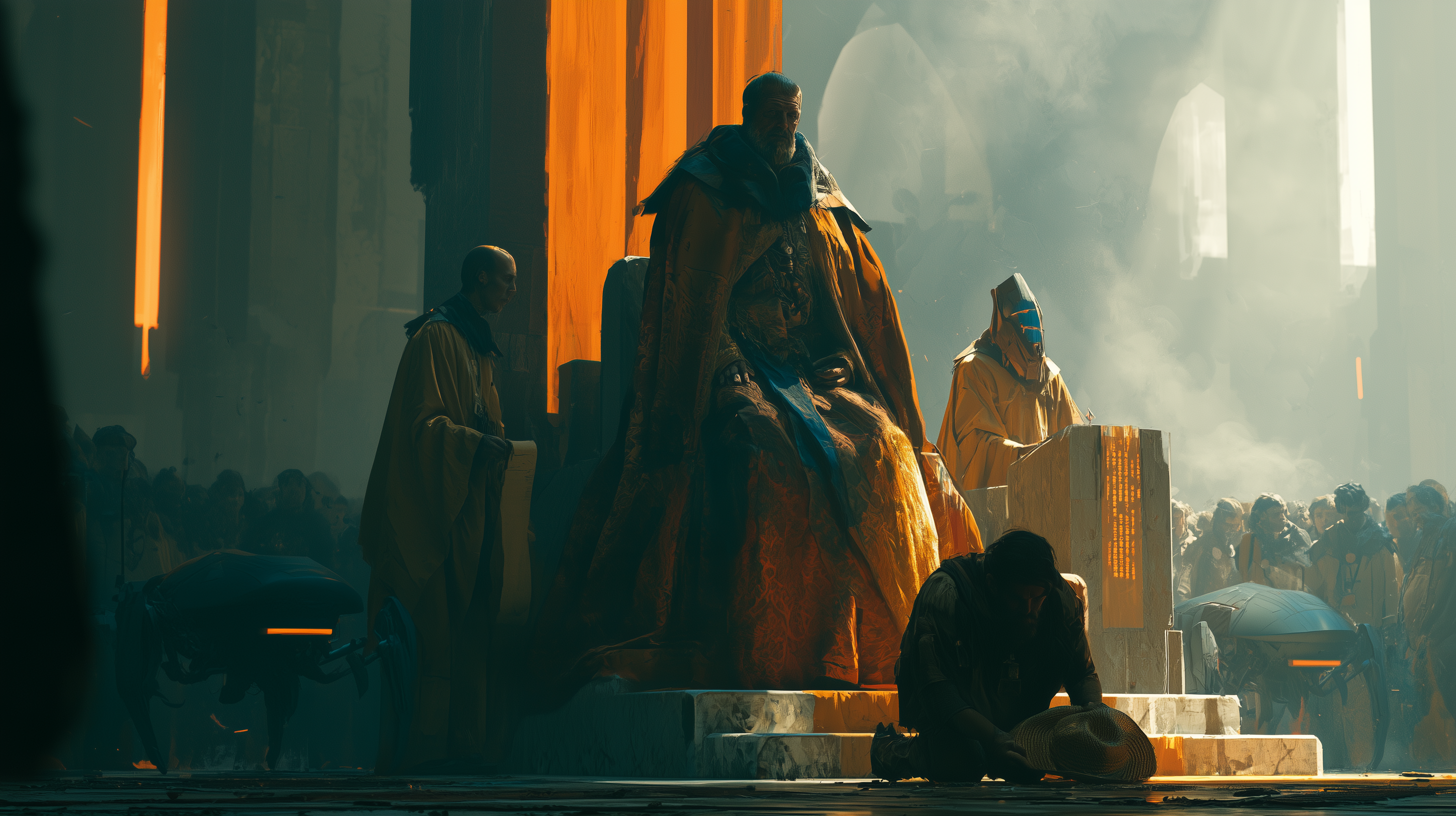
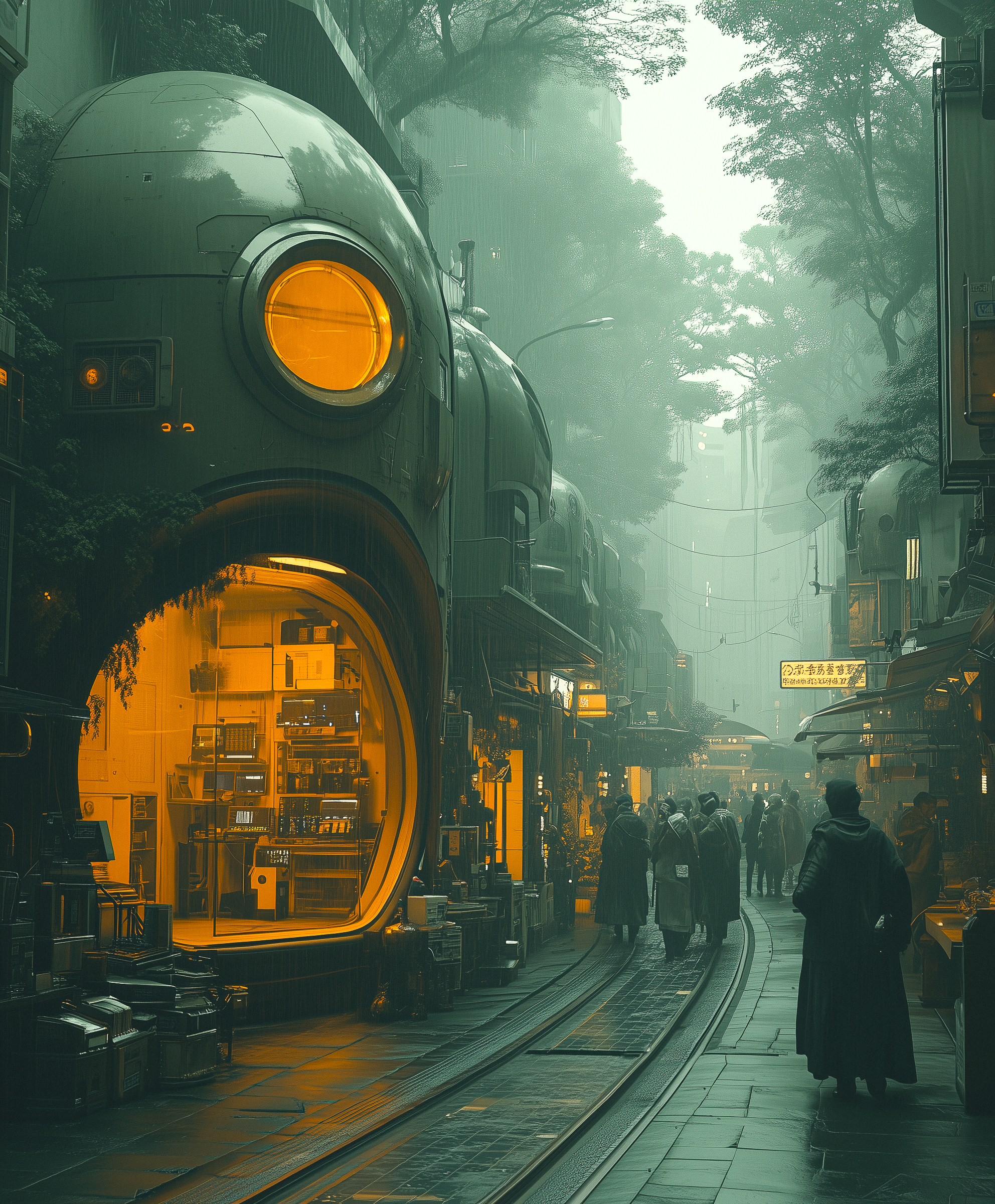
Deeper in the keep, past the market arcades and the ledger halls, the concrete opens into a room trying very hard to be a throne room. False vaulting. Orange strip-lights standing in for candles. A dais that is really a stage. A lord seated where a ministry would have put a desk.
This is where the ban is exercised. Where a summoner-key becomes a sentence, where days are added to the Corvée, where a tally becomes an audience. Accumulators stand at the ledger. Guards at the door. Petitioners on the tiles, hats in hand, waiting on a mood.
The city would not seat this man. The room knows it. The theatre is louder for the snub.
“Every field has a lord, but every field has a sky.”
— a Corvée saying, Southern Agfields
The Circle
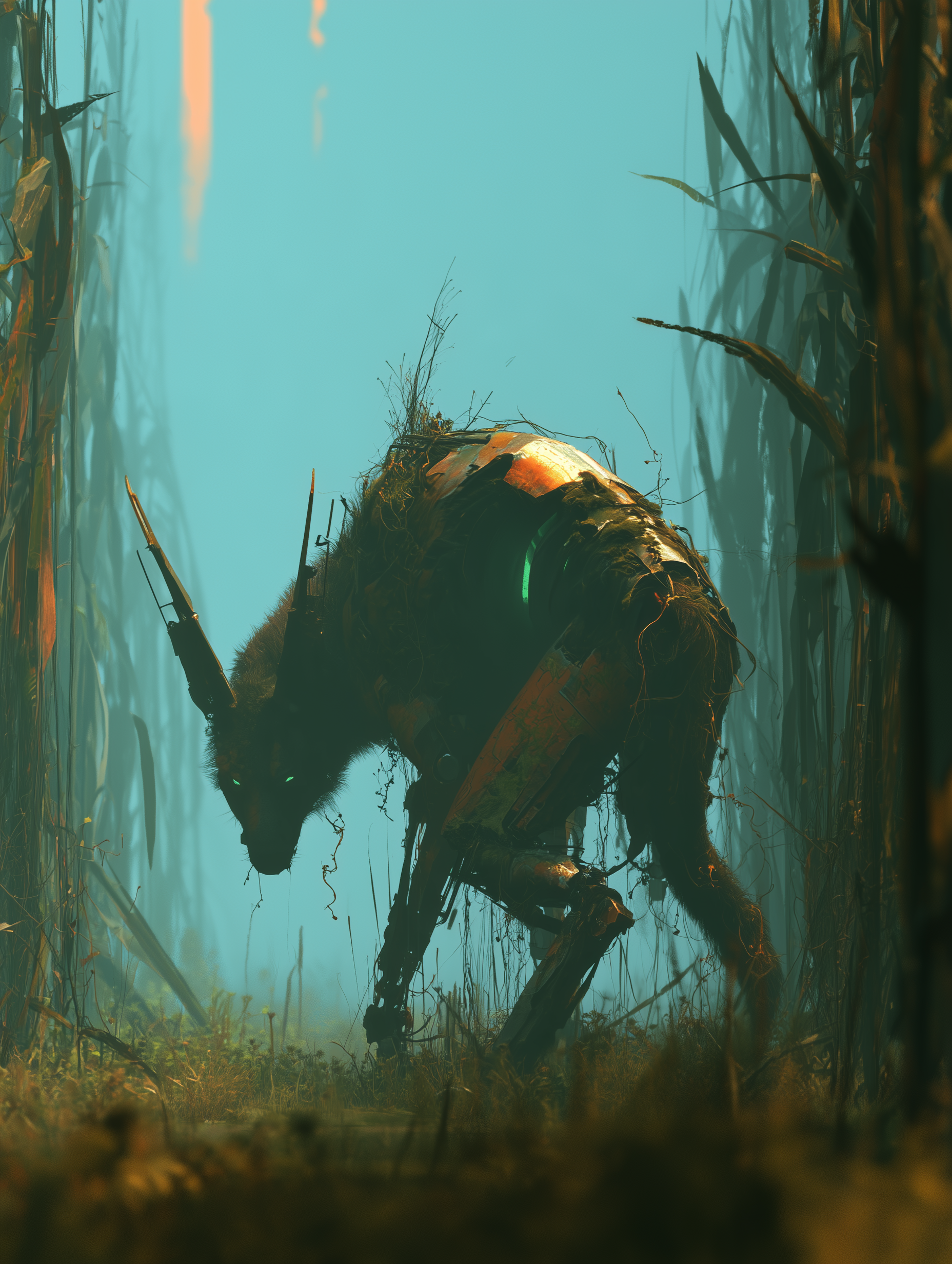
The Druid forests run against the eastern edge of the Agfields. The Druids do not walk the corn in daylight, and the keeps do not send lords into the treeline. Between them is a soft frontier of hedgerow and old-world ruin — and once in a while, when the Partisans have need, a village opens the corn to them.
They call the meeting the Circle. A clearing pressed flat by hand, in the dark, hidden from the walkers and the watch-lights of the keep. The crates come out of the treeline. An antlered druid meets the villager envoy in the middle. Torches burn low. The pack watches from the rim.
The trade is not for coin. It is for a bride, once a season — and only ever the girls the hamlets have already learned to be afraid of.
Corvée
- publishDate
Aug 23, 2026
- Generator
Midjourney v7
- Based On
Original World by Robert Austin